Tī kōuka (cabbage tree)
Cordyline australis
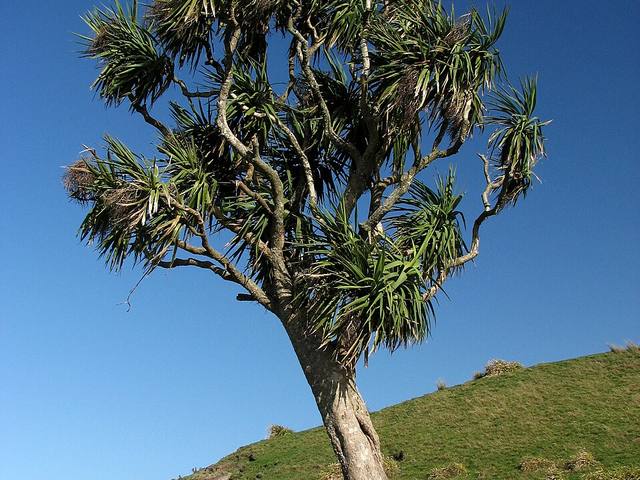
Sweet-scented flower plumes for bees; its heart and roots were a cooked food and its leaves a tough cord.
Hardiness: zones 8 to 11
Light: full sun
Size: about 30 ft tall, 10 ft wide
Harvest: year-round
From: Aotearoa New Zealand
Here: Too tender to overwinter outdoors on the Lake Erie shore (zone 6b to 7a): grow it in a pot and bring it in, or treat it as an annual.
Good for: food, pollinators, wildlife.
Native to: Aotearoa New Zealand. Hardy in zones 8 to 11.
The story
Tī kōuka was a food, a fibre and a signpost for Māori: groves marked trails and settlement sites, and the sugary roots and stems were steamed for days in earth ovens. Its leaves made rain capes and ropes that lasted in sea water.
Planting
Full sun and almost any soil, from swamp edge to dry bank. It stands wind and salt, and light frost once established.
Growing
Almost no care. Pull away dead leaves if you want a clean trunk; cut-back trunks reshoot.
Harvest and use
Today it is grown mainly for its scented early-summer flowers, which bees and birds crowd. The tender heart of a shoot can be cooked as a green, at the cost of that shoot.
What to watch for
Sudden decline, a disease spread by sap-sucking insects, can kill trees in warm lowlands. Fallen leaves tangle mower blades.
See if Tī kōuka (cabbage tree) fits your yard
Free planner: enter your ZIP for frost dates, climate fit and a sowing calendar. No account, no ads, no tracking cookies.
More native and wild plants
General guidance, not professional advice. Conditions vary by yard and year; for local specifics ask your county extension office. Never eat a wild plant you cannot identify with certainty. Traditional uses are shared as history, not medical advice. © 2026 Sean Priest · Irie Orchard. Terms & credits · Privacy · Home