Cattail
Typha latifolia
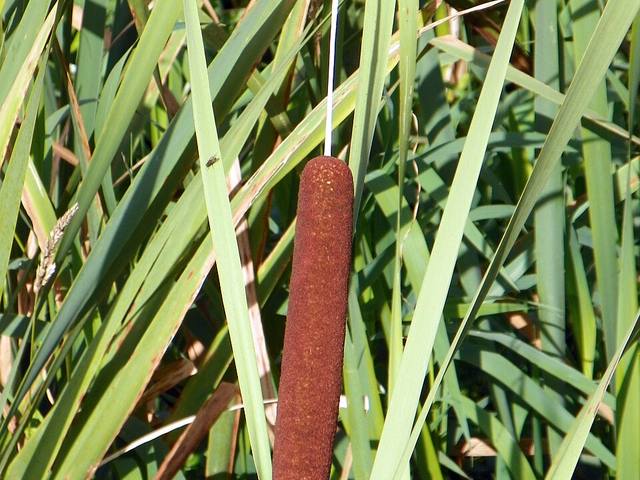
A whole pantry for a pond edge or wet ditch: spring shoots, summer pollen and flower spikes, starchy roots in fall. Gather only from clean water; it spreads fast.
Hardiness: zones 3 to 10
Light: full sun
Size: about 7 ft tall, 2 ft wide
Harvest: April to November
From: North America, Europe and Asia
Here: Hardy in the Lake Erie shore climate (zone 6b to 7a), so it can live outdoors in the ground.
Good for: food, wildlife.
Native to: Northeast, Southeast, Midwest & Great Lakes, Great Plains & Texas, Rockies & Great Basin, Desert Southwest, California, Pacific Northwest, Alaska, Eastern Canada, Western Canada, Temperate Europe, Northern Europe & the taiga. Hardy in zones 3 to 10.
The story
Cattail has been called the supermarket of the swamp. Peoples across North America and Eurasia ate it in every season, wove the leaves into mats and stuffed bedding with the fluff.
Planting
Shallow water or constantly wet soil in full sun. Plant it in a sunk tub to keep it where you want it.
Growing
Thin it every year or two. Without a barrier it will fill a small pond.
Harvest and use
Peel spring shoots for the tender white core, boil green flower spikes like corn on the cob, shake summer pollen into pancake batter and dig the starchy roots in fall.
What to watch for
Gather only from clean water; it takes up pollutants. Before it flowers it can be confused with poisonous iris, so be sure.
See if Cattail fits your yard
Free planner: enter your ZIP for frost dates, climate fit and a sowing calendar. No account, no ads, no tracking cookies.
More native and wild plants
General guidance, not professional advice. Conditions vary by yard and year; for local specifics ask your county extension office. Never eat a wild plant you cannot identify with certainty. Traditional uses are shared as history, not medical advice. © 2026 Sean Priest · Irie Orchard. Terms & credits · Privacy · Home