Maguey (pulque agave)
Agave salmiana
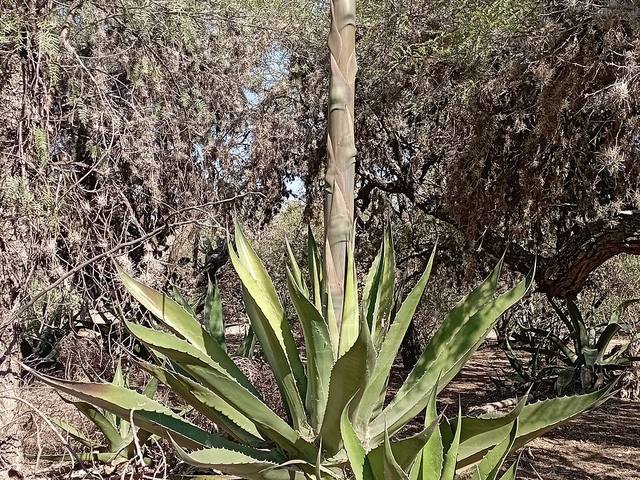
Sap brewed into pulque since Aztec times; leaves gave fibre, needles and thatch.
Hardiness: zones 8 to 11
Light: full sun
Size: about 6 ft tall, 8 ft wide
Harvest: year-round
From: Central Mexico
Here: Too tender to overwinter outdoors on the Lake Erie shore (zone 6b to 7a): grow it in a pot and bring it in, or treat it as an annual.
Good for: food, screens and hedges.
Native to: Mexico, Central America & the Caribbean, Desert Southwest. Hardy in zones 8 to 11.
The story
Maguey agaves were among the most useful plants of Mesoamerica. The Aztecs fermented the sap into pulque, a sacred drink, used the leaf fibres for rope, cloth and paper, and the spines as needles. Pulquerías still serve it in central Mexico.
Planting
Full sun, very well drained gritty soil; zone 8b and up, or a big pot. Plant an offset (pup) in spring.
Growing
Water only when the soil is dry; it hates wet feet. It grows slowly for 10 to 20 years, then sends up a giant flower stalk and dies, leaving pups.
Harvest and use
For pulque, the heart is cut out just before flowering and the sap (aguamiel) collected daily. Most gardeners grow it for its form and fibre.
What to watch for
Sharp spines; root rot in wet soil; agave snout weevil.
See if Maguey (pulque agave) fits your yard
Free planner: enter your ZIP for frost dates, climate fit and a sowing calendar. No account, no ads, no tracking cookies.
More native and wild plants
- American gooseberry
- Black huckleberry
- Mountain huckleberry
- Native honeyberry (mountain fly honeysuckle)
- Cattail
- Tī kōuka (cabbage tree)
General guidance, not professional advice. Conditions vary by yard and year; for local specifics ask your county extension office. Never eat a wild plant you cannot identify with certainty. Traditional uses are shared as history, not medical advice. © 2026 Sean Priest · Irie Orchard. Terms & credits · Privacy · Home