American gooseberry
Ribes hirtellum
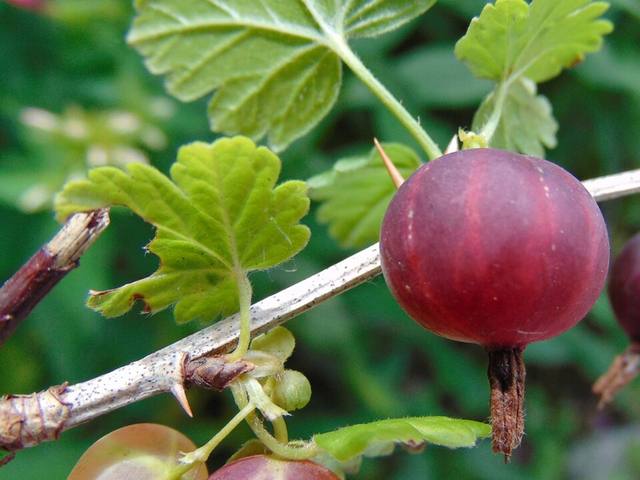
The native gooseberry: small sweet-tart berries that ripen pink to purple, and far less prone to mildew than European kinds.
Hardiness: zones 3 to 6
Light: part shade
Size: about 3 ft tall, 4 ft wide
Harvest: July
From: E. North America
Here: Hardy in the Lake Erie shore climate (zone 6b to 7a), so it can live outdoors in the ground.
Good for: food, pollinators, wildlife.
Native to: Northeast, Midwest & Great Lakes, Eastern Canada. Hardy in zones 3 to 6.
The story
The American gooseberry grows wild in northern swamps and thickets. Breeders crossed it with the big European kinds to bring in its resistance to mildew, so nearly every gooseberry sold in North America today has this plant in its family tree.
Planting
Part shade to sun and cool, moist soil. Mulch deeply.
Growing
Each winter cut out stems older than three years. Water in dry spells.
Harvest and use
Pick in July. Slightly green fruit is best for pie and jam; fully ripe pink-purple fruit is sweet enough to eat out of hand.
What to watch for
Thorns. Currant worm can strip the leaves fast. Check whether your area restricts Ribes because of white pine blister rust.
See if American gooseberry fits your yard
Free planner: enter your ZIP for frost dates, climate fit and a sowing calendar. No account, no ads, no tracking cookies.
More native and wild plants
- Black huckleberry
- Mountain huckleberry
- Native honeyberry (mountain fly honeysuckle)
- Cattail
- Tī kōuka (cabbage tree)
- Harakeke (New Zealand flax)
General guidance, not professional advice. Conditions vary by yard and year; for local specifics ask your county extension office. Never eat a wild plant you cannot identify with certainty. Traditional uses are shared as history, not medical advice. © 2026 Sean Priest · Irie Orchard. Terms & credits · Privacy · Home