Goosefoot (pitseed)
Chenopodium berlandieri
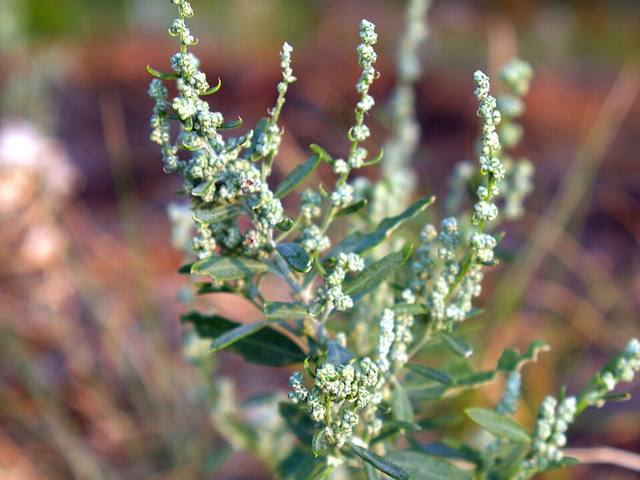
One of North America's own first crops, grown in Ohio and Kentucky 3,500 years ago; quinoa's wild cousin, with edible greens and seed.
Hardiness: zones 3 to 10
Light: full sun
Size: about 4 ft tall, 1.5 ft wide
Harvest: September to October
From: E. North America
Drought-hardy once established
Here: Hardy in the Lake Erie shore climate (zone 6b to 7a), so it can live outdoors in the ground.
Good for: food, wildlife.
Native to: Midwest & Great Lakes, Northeast, Southeast, Great Plains & Texas. Hardy in zones 3 to 10.
The story
Goosefoot was one of the crops of the Eastern Agricultural Complex, North America's own centre of plant domestication. Farmers in Kentucky, Ohio and Illinois grew it for its seed 3,500 years ago, and the Hopewell ate it alongside squash and sunflower long before maize arrived. It is a close wild cousin of quinoa.
Planting
Full sun, any soil, even disturbed or poor ground. Sow in spring a quarter inch deep; it often self-seeds after the first year.
Growing
Thin to a foot apart and water only in long droughts. It grows fast and needs almost no care.
Harvest and use
Eat young leaves like spinach, cooked. In autumn, strip the seed heads, dry, rub and winnow; rinse the seed well to remove its bitter coating, then cook like quinoa.
What to watch for
Self-seeds freely; leafminers on the greens.
See if Goosefoot (pitseed) fits your yard
Free planner: enter your ZIP for frost dates, climate fit and a sowing calendar. No account, no ads, no tracking cookies.
More native and wild plants
- Sumpweed (marsh elder)
- Wild rice (manoomin)
- Maguey (pulque agave)
- American gooseberry
- Black huckleberry
- Mountain huckleberry
General guidance, not professional advice. Conditions vary by yard and year; for local specifics ask your county extension office. Never eat a wild plant you cannot identify with certainty. Traditional uses are shared as history, not medical advice. © 2026 Sean Priest · Irie Orchard. Terms & credits · Privacy · Home