American beautyberry
Callicarpa americana
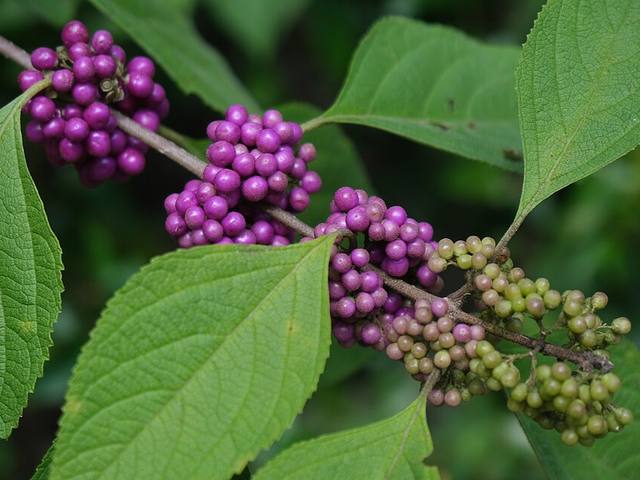
Purple berries into jelly, leaves crushed against mosquitoes; a bird magnet.
Hardiness: zones 6 to 10
Light: part shade to full sun
Size: about 6 ft tall, 6 ft wide
Harvest: September to October
From: SE United States
Drought-hardy once established
Here: Hardy in the Lake Erie shore climate (zone 6b to 7a), so it can live outdoors in the ground.
Good for: food, wildlife.
Native to: Southeast, Great Plains & Texas. Hardy in zones 6 to 10.
The story
American beautyberry leaves were crushed and rubbed on skin and horses against mosquitoes by Choctaw, Alabama and Seminole people, a use the USDA confirmed in 2006 by isolating the repellent compound; the purple berries, tasteless raw, make a rosy jelly.
Planting
Full sun or part shade, any drained soil, heat and humidity; plant in spring. A 6-foot shrub that drops its leaves.
Growing
Water the first year, then little. Cut it back to a foot in late winter; it fruits on new wood.
Harvest and use
Berries ripen magenta in autumn; boil for juice and make jelly. Crush fresh leaves against mosquitoes.
What to watch for
Nothing serious.
See if American beautyberry fits your yard
Free planner: enter your ZIP for frost dates, climate fit and a sowing calendar. No account, no ads, no tracking cookies.
More native and wild plants
- Chickasaw plum
- Aguacatillo (wild avocado)
- Toromiro
- Goosefoot (pitseed)
- Sumpweed (marsh elder)
- Wild rice (manoomin)
General guidance, not professional advice. Conditions vary by yard and year; for local specifics ask your county extension office. Never eat a wild plant you cannot identify with certainty. Traditional uses are shared as history, not medical advice. © 2026 Sean Priest · Irie Orchard. Terms & credits · Privacy · Home