California black walnut
Juglans californica
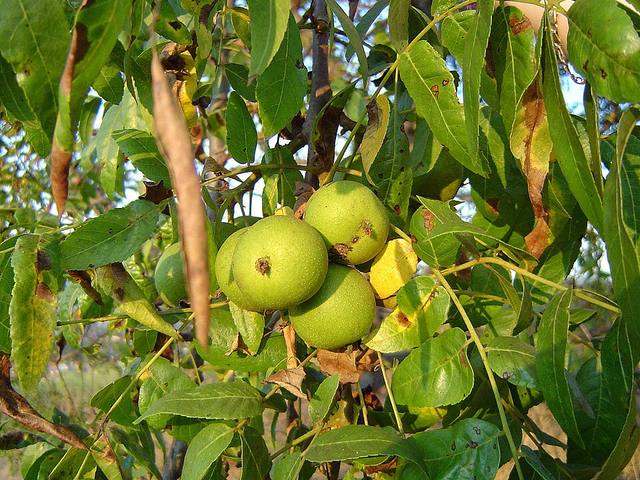
Small, rich nuts and a tough drought-proof canopy; the walnut of the chaparral.
Hardiness: zones 7 to 10
Light: full sun
Size: about 40 ft tall, 40 ft wide
Harvest: September to October
From: Southern California
Here: Hardy in the Lake Erie shore climate (zone 6b to 7a), so it can live outdoors in the ground.
Good for: food, wildlife.
Native to: California. Hardy in zones 7 to 10.
The story
California black walnut was gathered by the Tongva, Chumash and Cahuilla, who ate the small rich nuts, used the hulls for dye and gambling dice, and gave its name to the Walnut district of Los Angeles; the tree is now rare in the wild and protected.
Planting
Full sun, drained soil, and a Mediterranean climate; no summer water once established. Plant a nut or seedling; a 40-foot multi-trunked tree.
Growing
Water the first two summers, then never. Keep tomatoes and apples away from its juglone. No pruning.
Harvest and use
Nuts fall in autumn in black hulls; hull, dry, and crack the thick shell with a hammer. Small kernel, strong flavour.
What to watch for
Thousand cankers disease; squirrels.
See if California black walnut fits your yard
Free planner: enter your ZIP for frost dates, climate fit and a sowing calendar. No account, no ads, no tracking cookies.
More native and wild plants
General guidance, not professional advice. Conditions vary by yard and year; for local specifics ask your county extension office. Never eat a wild plant you cannot identify with certainty. Traditional uses are shared as history, not medical advice. © 2026 Sean Priest · Irie Orchard. Terms & credits · Privacy · Home