Black pepper
Piper nigrum
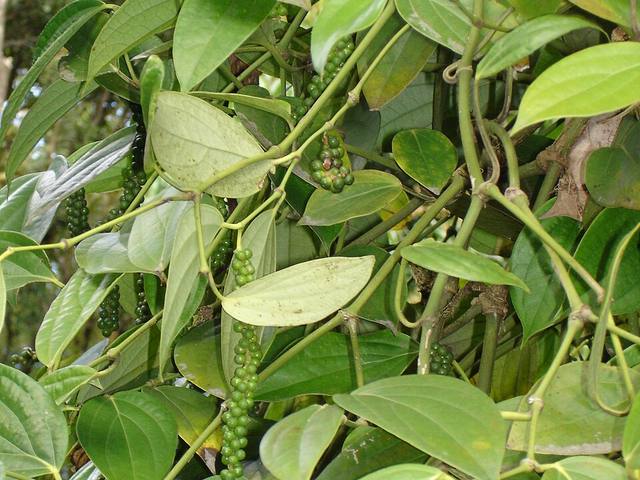
The spice vine of Kerala; train it up a shade tree and pick the spikes as the first berries redden.
Hardiness: zones 11 to 12
Light: part shade
Size: about 25 ft tall, 2 ft wide
Harvest: December to February
From: Western Ghats of India
Here: Too tender to overwinter outdoors on the Lake Erie shore (zone 6b to 7a): grow it in a pot and bring it in, or treat it as an annual.
Good for: food, traditional use, Ayurvedic tradition.
Native to: South & Southeast Asian tropics. Hardy in zones 11 to 12.
The story
Black pepper grows wild in the Western Ghats of Kerala, where it has been traded for 4,000 years; Rome paid for it in gold, Venice grew rich on it, and Vasco da Gama sailed to Calicut to cut out the middlemen. Every peppercorn is a dried green berry of this vine.
Planting
Part shade, rich, moist, drained soil, heat, humidity, and a tree or post to climb; no frost. Plant a rooted cutting at the base of a support in the wet tropics.
Growing
Keep moist and mulched, feed lightly, and tie the vine up as it grows. It fruits in three years and bears for decades.
Harvest and use
Spikes ripen about nine months after flowering; pick when the first berries redden, blanch briefly, and sun-dry to black. Pick fully red and soak off the skin for white pepper.
What to watch for
Foot rot in waterlogged soil, and any cold.
Safety
Medicinal uses here are shared as history, not advice. Kitchen amounts are fine for most people, but teas, tinctures and supplements can interact with medicines and aren't safe for everyone, especially in pregnancy, while breastfeeding, for children, or with liver or kidney problems. Ask a doctor or pharmacist before taking any plant as medicine.
See if Black pepper fits your yard
Free planner: enter your ZIP for frost dates, climate fit and a sowing calendar. No account, no ads, no tracking cookies.
More tropical and subtropical food plants
General guidance, not professional advice. Conditions vary by yard and year; for local specifics ask your county extension office. Never eat a wild plant you cannot identify with certainty. Traditional uses are shared as history, not medical advice. © 2026 Sean Priest · Irie Orchard. Terms & credits · Privacy · Home