Black walnut
Juglans nigra
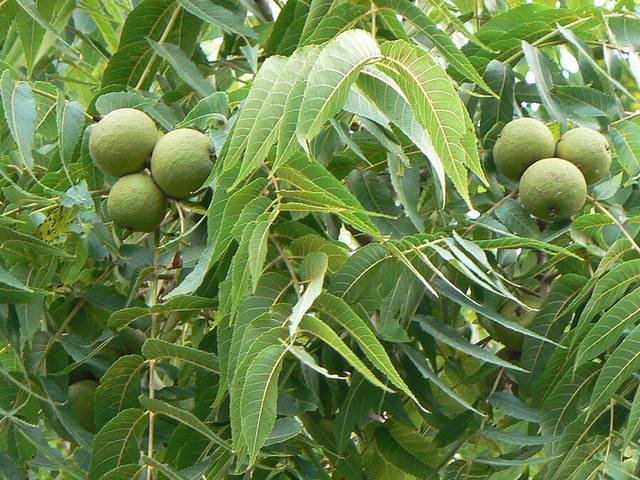
Rich nuts and valuable wood; strong juglone.
Hardiness: zones 4 to 9
Light: full sun
Size: about 70 ft tall, 50 ft wide
Harvest: September to October
From: E. North America
Here: Hardy in the Lake Erie shore climate (zone 6b to 7a), so it can live outdoors in the ground.
Good for: food, wildlife.
Native to: Northeast, Southeast, Midwest & Great Lakes, Great Plains & Texas, Eastern Canada. Hardy in zones 4 to 9.
The story
Black walnut fed the peoples of the Eastern Woodlands for thousands of years; the nuts were pounded into milk and the hulls gave a dark brown dye still used today. Settlers prized the timber so highly that old trees were sometimes stolen from woodlots by night.
Planting
Full sun, deep bottomland soil, and distance: its juglone kills tomatoes, apples and many others within the drip line. Plant nuts in autumn or a seedling; grafted types like 'Thomas' crack more easily.
Growing
Little care beyond water in the first summers. It grows fast and tall, 70 feet and more. Prune lower limbs early for a clean trunk.
Harvest and use
Nuts fall in early autumn in green hulls that stain everything; hull them with gloves (or drive over them), wash, cure two weeks, then crack with a hammer.
What to watch for
Thousand cankers disease in the West; webworm; the mess of hulls on paths.
See if Black walnut fits your yard
Free planner: enter your ZIP for frost dates, climate fit and a sowing calendar. No account, no ads, no tracking cookies.
More nut trees
General guidance, not professional advice. Conditions vary by yard and year; for local specifics ask your county extension office. Never eat a wild plant you cannot identify with certainty. Traditional uses are shared as history, not medical advice. © 2026 Sean Priest · Irie Orchard. Terms & credits · Privacy · Home