Cashew
Anacardium occidentale
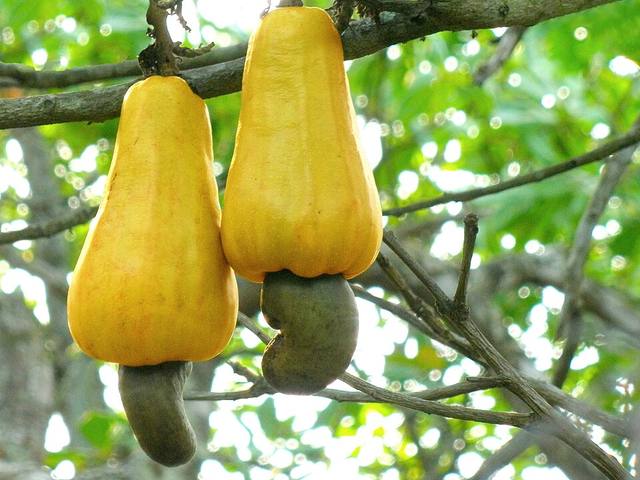
The nut hangs below a juicy 'apple'.
Hardiness: zones 10 to 12
Light: full sun
Size: about 30 ft tall, 30 ft wide
Harvest: February to May
From: NE Brazil
Drought-hardy once established
Here: Too tender to overwinter outdoors on the Lake Erie shore (zone 6b to 7a): grow it in a pot and bring it in, or treat it as an annual.
Good for: food.
Native to: Tropical South America. Hardy in zones 10 to 12.
The story
Cashew is native to the dry coast of northeast Brazil, where the Tupi ate the swollen fruit stalk, the cashew apple, as much as the nut; the Portuguese carried it to Goa and Mozambique in the 1560s and India became the great roaster. The nut sits outside the fruit in a shell full of caustic oil.
Planting
Full sun, sandy drained soil, heat, and a dry season; it fails in wet clay and frost. Plant a seedling or grafted dwarf; it fruits in three years.
Growing
Water young trees, then little; it is a drought tree. Prune lightly to shape. It flowers at the end of the dry season.
Harvest and use
The apple and nut ripen together; twist the nut off and roast it outdoors, since the shell smoke burns skin and lungs. The apple is eaten fresh or juiced the same day.
What to watch for
The caustic shell oil, tea mosquito bug, and anthracnose in wet weather.
See if Cashew fits your yard
Free planner: enter your ZIP for frost dates, climate fit and a sowing calendar. No account, no ads, no tracking cookies.
More nut trees
General guidance, not professional advice. Conditions vary by yard and year; for local specifics ask your county extension office. Never eat a wild plant you cannot identify with certainty. Traditional uses are shared as history, not medical advice. © 2026 Sean Priest · Irie Orchard. Terms & credits · Privacy · Home