Korean pine (pine nut)
Pinus koraiensis
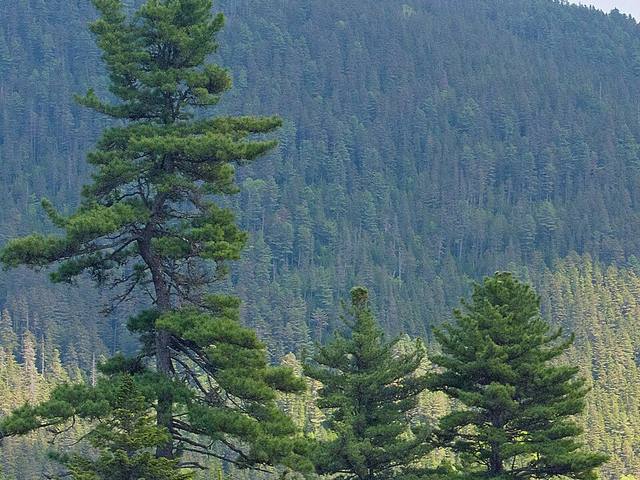
The pine nut of cold climates: slow, but cones full of big nuts after 10 to 15 years.
Hardiness: zones 3 to 7
Light: full sun to part shade
Size: about 50 ft tall, 25 ft wide
Harvest: September to October
From: NE Asia
Here: Hardy in the Lake Erie shore climate (zone 6b to 7a), so it can live outdoors in the ground.
Good for: food, wildlife.
Native to: East Asia, Northern Europe & the taiga, Japan & its islands. Hardy in zones 3 to 7.
The story
Korean pine nuts have been gathered in the forests of Manchuria, Korea and the Russian Far East for thousands of years by Nanai, Udege and Korean villagers, who climbed the trees for cones; they are the pine nuts in most Asian markets and the staple food of the Siberian tiger's prey.
Planting
Full sun or light shade, drained acid to neutral soil, and a cold climate; slow, to 50 feet. Plant young and give it 20 years.
Growing
Water the first summers, mulch, and leave it. No pruning. It is hardier than any other nut pine.
Harvest and use
Cones ripen in early autumn in good years; gather, dry until they open, and crack the big nuts. Squirrels compete hard.
What to watch for
Squirrels, white pine blister rust where currants grow nearby, and the wait.
See if Korean pine (pine nut) fits your yard
Free planner: enter your ZIP for frost dates, climate fit and a sowing calendar. No account, no ads, no tracking cookies.
More nut trees
- Yellowhorn
- Ginkgo (female, for nuts)
- Malabar chestnut (money tree)
- Pili nut
- Kukui (candlenut)
- Breadnut (Maya nut)
General guidance, not professional advice. Conditions vary by yard and year; for local specifics ask your county extension office. Never eat a wild plant you cannot identify with certainty. Traditional uses are shared as history, not medical advice. © 2026 Sean Priest · Irie Orchard. Terms & credits · Privacy · Home