Ginkgo (female, for nuts)
Ginkgo biloba
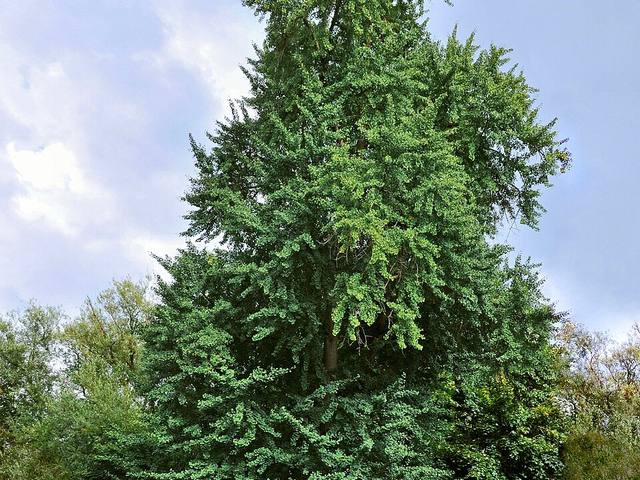
Plant a grafted female for the nuts; the fleshy coat smells, the kernel inside is a delicacy.
Hardiness: zones 4 to 9
Light: full sun
Size: about 60 ft tall, 35 ft wide
Harvest: October to November
From: China
Drought-hardy once established
Here: Hardy in the Lake Erie shore climate (zone 6b to 7a), so it can live outdoors in the ground.
Good for: food, traditional use.
Native to: East Asia. Hardy in zones 4 to 9.
The story
Ginkgo is the last of a lineage older than dinosaurs, kept alive in Chinese temple gardens; its nuts have been roasted and added to congee and chawanmushi in China, Japan and Korea for a thousand years, and six trees survived the Hiroshima bomb.
Planting
Full sun, any drained soil; plant a grafted female (with a male nearby) for nuts, or any ginkgo for shade. Slow at first, 60 feet eventually, and nearly immortal.
Growing
Water young trees; after that it takes drought, salt and city air. No pruning needed.
Harvest and use
Fruit drops in autumn with a rancid smell; wear gloves (the pulp irritates skin), wash off the flesh, dry the nuts, and roast. Eat a few at a time; too many is toxic.
What to watch for
The smell and the skin irritation from the pulp; nothing else.
Safety
Medicinal uses here are shared as history, not advice. Kitchen amounts are fine for most people, but teas, tinctures and supplements can interact with medicines and aren't safe for everyone, especially in pregnancy, while breastfeeding, for children, or with liver or kidney problems. Ask a doctor or pharmacist before taking any plant as medicine.
See if Ginkgo (female, for nuts) fits your yard
Free planner: enter your ZIP for frost dates, climate fit and a sowing calendar. No account, no ads, no tracking cookies.
More nut trees
- Malabar chestnut (money tree)
- Pili nut
- Kukui (candlenut)
- Breadnut (Maya nut)
- Chilgoza pine
- Himalayan hazel
General guidance, not professional advice. Conditions vary by yard and year; for local specifics ask your county extension office. Never eat a wild plant you cannot identify with certainty. Traditional uses are shared as history, not medical advice. © 2026 Sean Priest · Irie Orchard. Terms & credits · Privacy · Home