Brazil nut
Bertholletia excelsa
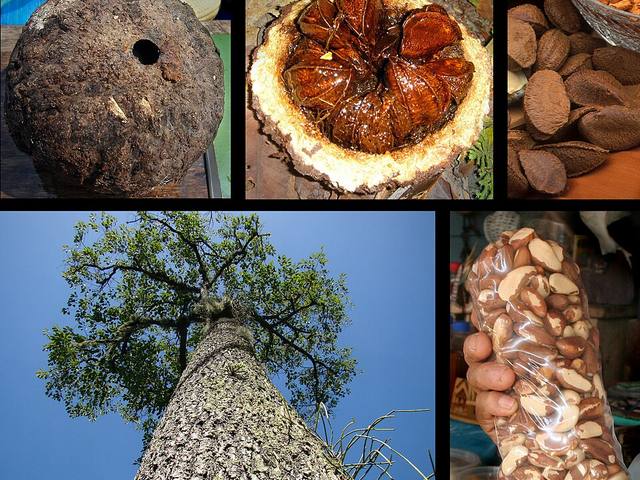
A rainforest giant that only big orchid bees can pollinate, so the nuts are gathered from wild forest.
Hardiness: zones 11 to 12
Light: full sun
Size: about 150 ft tall, 60 ft wide
Harvest: January to March
From: Amazon basin
Here: Too tender to overwinter outdoors on the Lake Erie shore (zone 6b to 7a): grow it in a pot and bring it in, or treat it as an annual.
Good for: food, wildlife.
Native to: Tropical South America. Hardy in zones 11 to 12.
The story
Brazil nuts come only from wild trees of the Amazon forest, pollinated by one kind of bee and opened by one kind of rodent; the Kayapó and other Amazonian peoples gathered them for millennia, and the harvest still supports forest communities in Bolivia, Brazil and Peru. It cannot be farmed; it must be kept wild.
Planting
Full sun above, forest around, deep rich soil, heat and humidity; a 150-foot tree that needs its wild pollinators. Plant only in the humid tropics with space and decades to spare.
Growing
Water young trees and leave the forest around it; it needs the orchid bees of intact forest to set fruit.
Harvest and use
Cannonball fruit fall in the wet season, 12 to 15 years from planting at best; split with a machete for the nuts inside. Stand well clear of falling fruit.
What to watch for
Lack of pollinators outside intact forest; falling fruit.
See if Brazil nut fits your yard
Free planner: enter your ZIP for frost dates, climate fit and a sowing calendar. No account, no ads, no tracking cookies.
More nut trees
- Argan
- Bunya pine
- Korean pine (pine nut)
- Yellowhorn
- Ginkgo (female, for nuts)
- Malabar chestnut (money tree)
General guidance, not professional advice. Conditions vary by yard and year; for local specifics ask your county extension office. Never eat a wild plant you cannot identify with certainty. Traditional uses are shared as history, not medical advice. © 2026 Sean Priest · Irie Orchard. Terms & credits · Privacy · Home