Canelo (Winter's bark)
Drimys winteri
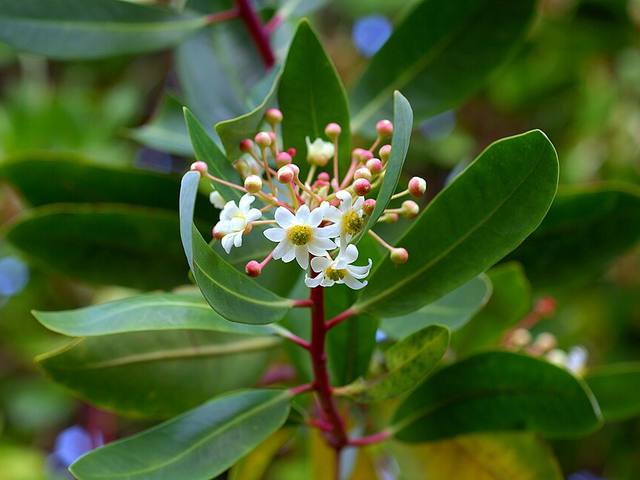
The sacred tree of the Mapuche; its peppery bark kept Captain Winter's crew free of scurvy in 1578.
Hardiness: zones 8 to 10
Light: part shade
Size: about 40 ft tall, 20 ft wide
From: Chile and Argentina
Here: Too tender to overwinter outdoors on the Lake Erie shore (zone 6b to 7a): grow it in a pot and bring it in, or treat it as an annual.
Good for: pollinators, wildlife, traditional use.
Native to: Southern Cone & Patagonia. Hardy in zones 8 to 10.
The story
Canelo is the sacred tree of the Mapuche. It stands at the centre of the rewe, the ceremonial altar, and a branch of it is a sign of peace. In 1578 Captain John Winter brought its bark home from the Strait of Magellan, and the tree has carried his name in English ever since.
Planting
Part shade, shelter and moist, acid, humus-rich soil in a mild, damp climate.
Growing
Keep it watered. It needs little pruning.
Harvest and use
Scented ivory flowers in spring. The bark and leaves are peppery; the dried berries were used as a pepper substitute in Chile.
What to watch for
Drought, hot sun and alkaline soil.
Safety
Medicinal uses here are shared as history, not advice. Kitchen amounts are fine for most people, but teas, tinctures and supplements can interact with medicines and aren't safe for everyone, especially in pregnancy, while breastfeeding, for children, or with liver or kidney problems. Ask a doctor or pharmacist before taking any plant as medicine.
See if Canelo (Winter's bark) fits your yard
Free planner: enter your ZIP for frost dates, climate fit and a sowing calendar. No account, no ads, no tracking cookies.
More helper plants for soil, wildlife and biomass
General guidance, not professional advice. Conditions vary by yard and year; for local specifics ask your county extension office. Never eat a wild plant you cannot identify with certainty. Traditional uses are shared as history, not medical advice. © 2026 Sean Priest · Irie Orchard. Terms & credits · Privacy · Home