Pigeon pea
Cajanus cajan
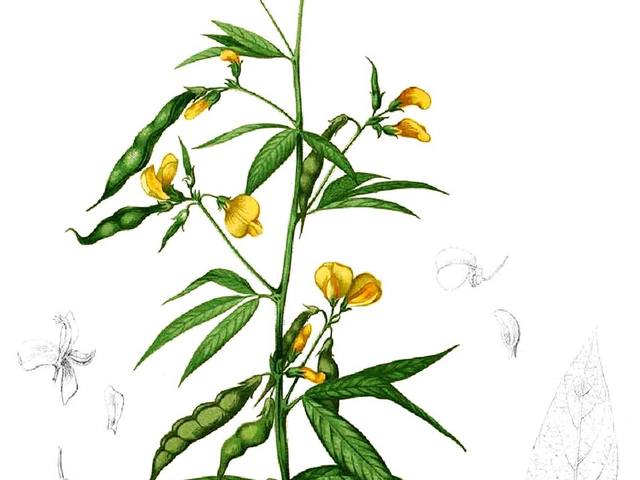
A fast nitrogen-fixing shrub with edible peas.
Hardiness: zones 9 to 12
Light: full sun
Size: about 8 ft tall, 6 ft wide
Harvest: November to February
From: India
Drought-hardy once established
Here: Too tender to overwinter outdoors on the Lake Erie shore (zone 6b to 7a): grow it in a pot and bring it in, or treat it as an annual.
Good for: food, fixing nitrogen in the soil.
Native to: South & Southeast Asian tropics. Hardy in zones 9 to 12.
The story
Pigeon pea was domesticated in India 3,500 years ago and is the toor dal of every Indian kitchen; it crossed to Africa and then the Caribbean with the slave trade, where it became the gandules of Puerto Rico's rice. It fixes nitrogen and feeds the soil while it feeds people.
Planting
Full sun, any drained soil including poor ground, and heat; it dies at frost but makes a crop in one season from spring sowing. Sow seed an inch deep after the soil warms.
Growing
Water young plants, then little; it is a drought shrub. No feeding; it makes its own nitrogen. Cut back after harvest where it overwinters.
Harvest and use
Green pods for shelling in late summer, dry pods for dal in autumn; pick as they brown. The leaves make fodder and mulch.
What to watch for
Pod borers and frost.
See if Pigeon pea fits your yard
Free planner: enter your ZIP for frost dates, climate fit and a sowing calendar. No account, no ads, no tracking cookies.
More helper plants for soil, wildlife and biomass
General guidance, not professional advice. Conditions vary by yard and year; for local specifics ask your county extension office. Never eat a wild plant you cannot identify with certainty. Traditional uses are shared as history, not medical advice. © 2026 Sean Priest · Irie Orchard. Terms & credits · Privacy · Home