Lavender
Lavandula angustifolia
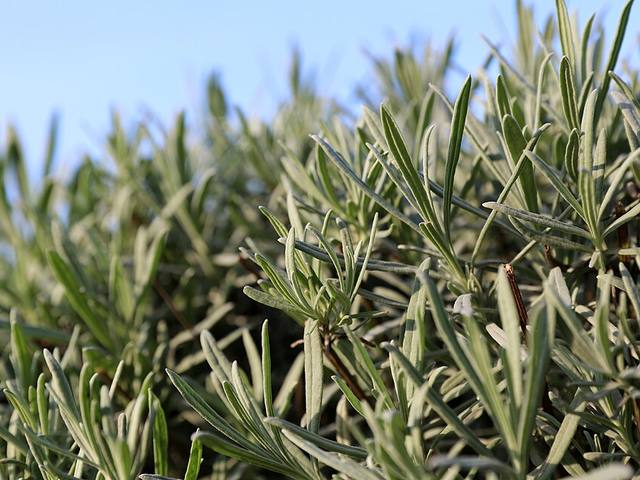
Dry, sunny edges; a bee magnet.
Hardiness: zones 5 to 9
Light: full sun
Size: about 2 ft tall, 2 ft wide
Harvest: June to August
From: Mediterranean
Drought-hardy once established
Here: Hardy in the Lake Erie shore climate (zone 6b to 7a), so it can live outdoors in the ground.
Good for: pollinators, traditional use.
Native to: Mediterranean. Hardy in zones 5 to 9.
The story
Dry, rocky hillsides of the Mediterranean. Bumblebees and honeybees work lavender all summer, and it's one of the best plants for drawing bees to a patio.
Planting
Full sun. Soil: lean, sharply drained; hates wet clay (pH 6.5–8.0). Spacing: 18–24 in. Pollination: not needed (grown for flowers).
Growing
Water: little once established. Winter: Leave it unpruned until spring; the old stems protect the crown. Wet soil kills it more often than cold does. Spring: When new green shows at the base (about April), cut back by a third, but never into bare old wood. Summer: Cut flower stems for drying; a light shear after bloom can bring a second flush. Fall: Don't feed or mulch heavily. A gravel mulch keeps the crown dry.
Harvest and use
Harvest: Flower stems Jun–Jul, just as the first buds open. First crop: blooms the first or second summer.
What to watch for
Root rot in wet clay, winter wet, woody, leggy plants after 5–7 years.
Safety
Medicinal uses here are shared as history, not advice. Kitchen amounts are fine for most people, but teas, tinctures and supplements can interact with medicines and aren't safe for everyone, especially in pregnancy, while breastfeeding, for children, or with liver or kidney problems. Ask a doctor or pharmacist before taking any plant as medicine.
See if Lavender fits your yard
Free planner: enter your ZIP for frost dates, climate fit and a sowing calendar. No account, no ads, no tracking cookies.
More helper plants for soil, wildlife and biomass
General guidance, not professional advice. Conditions vary by yard and year; for local specifics ask your county extension office. Never eat a wild plant you cannot identify with certainty. Traditional uses are shared as history, not medical advice. © 2026 Sean Priest · Irie Orchard. Terms & credits · Privacy · Home