Buckwheat
Fagopyrum esculentum
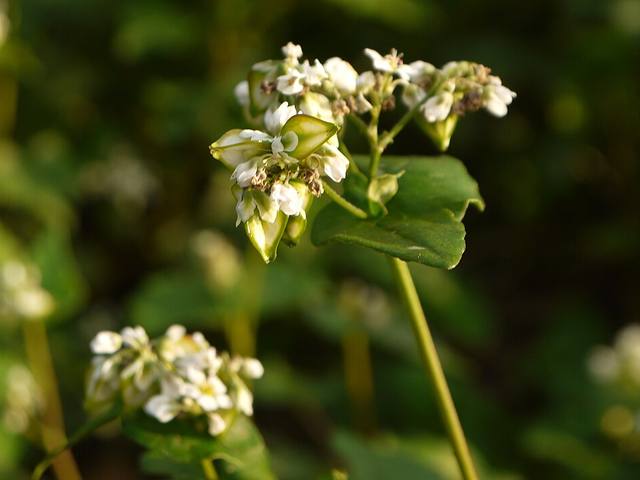
Smothers weeds in six weeks and feeds bees while it does.
Hardiness: zones 2 to 11
Light: full sun
Size: about 3 ft tall, 1 ft wide
From: Central Asia
Here: Hardy in the Lake Erie shore climate (zone 6b to 7a), so it can live outdoors in the ground.
Good for: pollinators, mulch and biomass.
Native to: Himalaya & Indian hill country. Hardy in zones 2 to 11.
The story
Buckwheat is not wheat, nor even a grass; it is a cousin of rhubarb. It came from the hills of southwest China and the Himalaya, and it is the fastest crop most gardeners will ever sow.
Planting
Scatter seed on any bare soil after the last frost and rake it in. Sow again whenever a bed comes empty in summer.
Growing
Flowers in four to five weeks. Cut it down within ten days of first bloom to keep it from seeding.
Harvest and use
It smothers weeds, unlocks phosphorus for the next crop and draws bees and hoverflies by the hundred. Let a patch ripen for grain: pancakes, soba, kasha.
What to watch for
Frost kills it at once. It reseeds if left to ripen.
See if Buckwheat fits your yard
Free planner: enter your ZIP for frost dates, climate fit and a sowing calendar. No account, no ads, no tracking cookies.
More helper plants for soil, wildlife and biomass
General guidance, not professional advice. Conditions vary by yard and year; for local specifics ask your county extension office. Never eat a wild plant you cannot identify with certainty. Traditional uses are shared as history, not medical advice. © 2026 Sean Priest · Irie Orchard. Terms & credits · Privacy · Home