Daffodil
Narcissus spp.
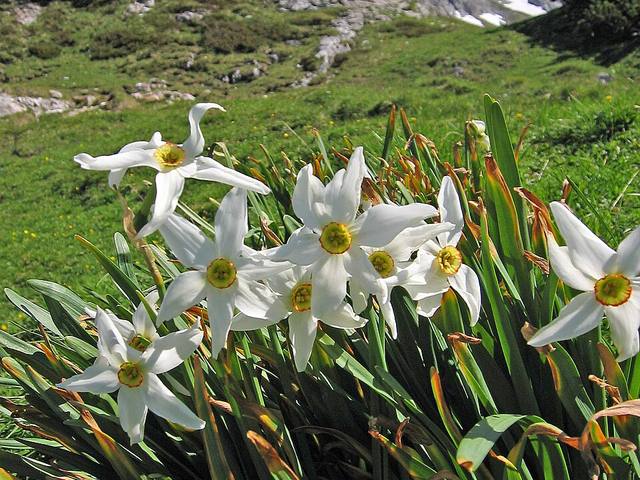
Ring young fruit trees with them; voles and deer avoid the bulbs.
Hardiness: zones 3 to 9
Light: full sun
Size: about 1.5 ft tall, 0.5 ft wide
From: Europe
Drought-hardy once established
Here: Hardy in the Lake Erie shore climate (zone 6b to 7a), so it can live outdoors in the ground.
Good for: pollinators.
Native to: Temperate Europe, Mediterranean. Hardy in zones 3 to 9.
The story
Daffodils come from the meadows and woods of Spain, Portugal and the western Mediterranean. Every part of the plant contains bitter alkaloids, which is why the deer, rabbits, voles and squirrels that eat your tulips leave these strictly alone.
Planting
Plant bulbs in fall, three times as deep as they are tall, in sun or under trees that leaf out late.
Growing
Let the leaves yellow and die back on their own; that is next year's flower being made. Divide crowded clumps.
Harvest and use
A ring of daffodils around a young fruit tree keeps voles from the roots and grass from the trunk. Early kinds give pollen to the first bees.
What to watch for
All parts are poisonous. Keep the bulbs apart from onions in storage.
See if Daffodil fits your yard
Free planner: enter your ZIP for frost dates, climate fit and a sowing calendar. No account, no ads, no tracking cookies.
More helper plants for soil, wildlife and biomass
- Tarwi (Andean lupin)
- Partridge pea
- Wattleseed (prickly wattle)
- Neem
- Tree cotton
- Ethiopian coral tree (korch)
General guidance, not professional advice. Conditions vary by yard and year; for local specifics ask your county extension office. Never eat a wild plant you cannot identify with certainty. Traditional uses are shared as history, not medical advice. © 2026 Sean Priest · Irie Orchard. Terms & credits · Privacy · Home