Wattleseed (prickly wattle)
Acacia victoriae
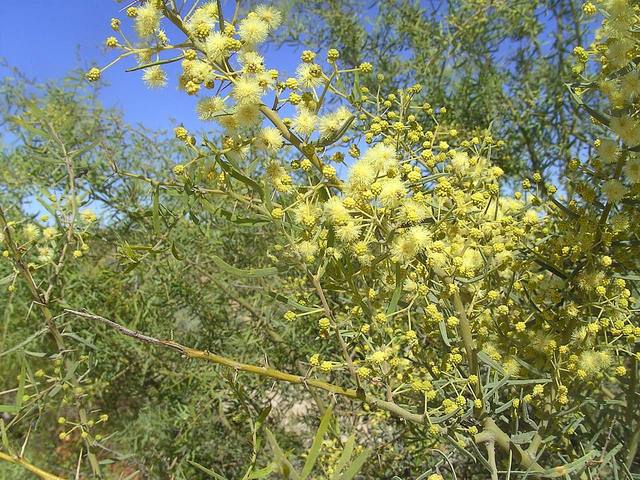
A tough nitrogen-fixer whose roasted, ground seed tastes of coffee and hazelnut; eat only this species.
Hardiness: zones 9 to 11
Light: full sun
Size: about 15 ft tall, 15 ft wide
Harvest: June to August
From: Inland Australia
Drought-hardy once established
Here: Too tender to overwinter outdoors on the Lake Erie shore (zone 6b to 7a): grow it in a pot and bring it in, or treat it as an annual.
Good for: food, fixing nitrogen in the soil, pollinators.
Native to: Australia. Hardy in zones 9 to 11.
The story
Wattle seed was ground into flour and damper by Aboriginal peoples across inland Australia for tens of thousands of years, roasted to a coffee-chocolate flavour; several acacias are used, and it is now a bush-food spice in ice cream and bread. The tree also fixes nitrogen.
Planting
Full sun, dry drained soil, and a warm, arid or Mediterranean climate; a fast shrub or small tree. Sow scarified seed or plant a seedling.
Growing
Water the first summer, then never. Prune lightly to shape; it is short-lived and self-sows.
Harvest and use
Pods ripen in summer; collect, dry, thresh, and roast the seed lightly before grinding. Use only known edible species such as Acacia victoriae.
What to watch for
Wet soil and borers in old trees.
See if Wattleseed (prickly wattle) fits your yard
Free planner: enter your ZIP for frost dates, climate fit and a sowing calendar. No account, no ads, no tracking cookies.
More helper plants for soil, wildlife and biomass
General guidance, not professional advice. Conditions vary by yard and year; for local specifics ask your county extension office. Never eat a wild plant you cannot identify with certainty. Traditional uses are shared as history, not medical advice. © 2026 Sean Priest · Irie Orchard. Terms & credits · Privacy · Home