Vetiver
Chrysopogon zizanioides
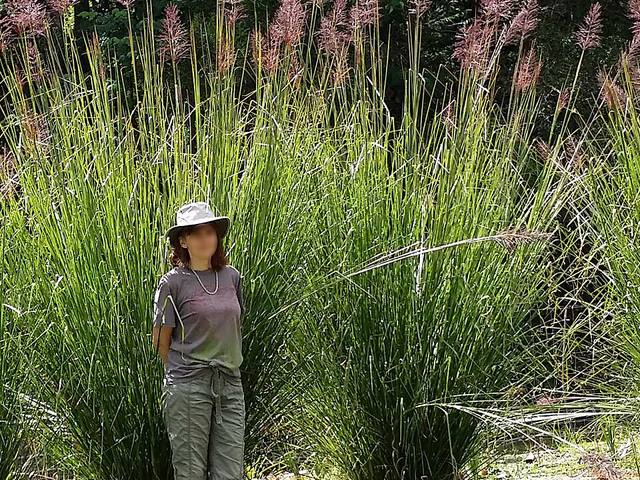
A clumping grass with deep, cool-scented roots: holds banks in place, and its roots weave into screens and scent water.
Hardiness: zones 8 to 12
Light: full sun
Size: about 5 ft tall, 3 ft wide
From: India and SE Asia
Here: Too tender to overwinter outdoors on the Lake Erie shore (zone 6b to 7a): grow it in a pot and bring it in, or treat it as an annual.
Good for: mulch and biomass, traditional use, Ayurvedic tradition.
Native to: South & Southeast Asian tropics. Hardy in zones 8 to 12.
The story
Vetiver is a clumping grass whose roots grow straight down, sometimes ten feet, which is why it is planted as a living wall against erosion. The cool, earthy root is woven into screens, scented water and hot-weather drinks in India.
Planting
Full sun and almost any soil, wet or dry. Use a sterile cultivar such as Sunshine; it does not spread by seed. Hardy in the warmest zones, and a good pot plant elsewhere.
Growing
Plant 6 to 12 inches apart on a slope or along a swale. Cut it back to about a foot every year.
Harvest and use
The roots are lifted in the dry season, washed and used fresh or dried. The cut foliage makes dense, lasting mulch.
What to watch for
Hard frost and shade.
Safety
Medicinal uses here are shared as history, not advice. Kitchen amounts are fine for most people, but teas, tinctures and supplements can interact with medicines and aren't safe for everyone, especially in pregnancy, while breastfeeding, for children, or with liver or kidney problems. Ask a doctor or pharmacist before taking any plant as medicine.
See if Vetiver fits your yard
Free planner: enter your ZIP for frost dates, climate fit and a sowing calendar. No account, no ads, no tracking cookies.
More helper plants for soil, wildlife and biomass
- Arjuna
- Kānuka
- Cape aloe (bitter aloe)
- African wormwood (wilde-als)
- Canelo (Winter's bark)
- Caucasian linden
General guidance, not professional advice. Conditions vary by yard and year; for local specifics ask your county extension office. Never eat a wild plant you cannot identify with certainty. Traditional uses are shared as history, not medical advice. © 2026 Sean Priest · Irie Orchard. Terms & credits · Privacy · Home