Cape aloe (bitter aloe)
Aloe ferox
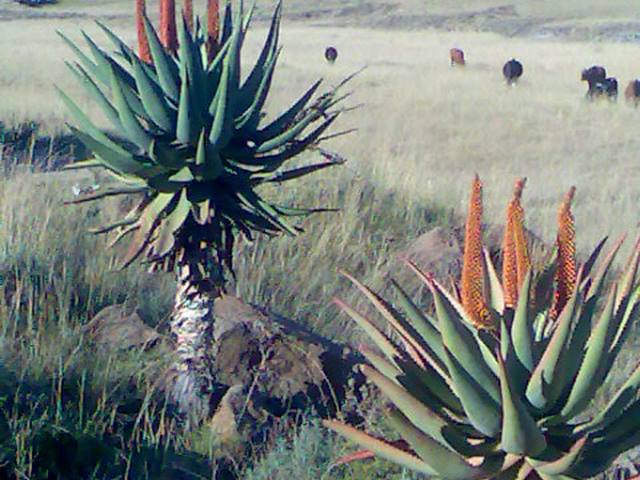
A single-stemmed aloe with winter candelabras of orange flowers that sunbirds queue for.
Hardiness: zones 9 to 11
Light: full sun
Size: about 8 ft tall, 4 ft wide
From: Southern Africa
Drought-hardy once established
Here: Too tender to overwinter outdoors on the Lake Erie shore (zone 6b to 7a): grow it in a pot and bring it in, or treat it as an annual.
Good for: pollinators, wildlife, traditional use.
Native to: Cape of South Africa, African savannas & tropics. Hardy in zones 9 to 11.
The story
Cape aloe is painted on the rock shelters of the San. Its bitter sap has been tapped and dried for trade since the 1700s, and the harvest is still done by hand in the Eastern and Western Cape.
Planting
Full sun and gritty, fast-draining soil. Grow it in a large pot where there is frost.
Growing
Water rarely. Leave the skirt of dry leaves on the trunk; it protects the stem from sun and fire.
Harvest and use
Tall orange-red flower candles in winter, loaded with nectar for sunbirds, weavers and bees.
What to watch for
Wet cold. The leaf edges are toothed. The bitter sap is a strong traditional purgative and not for home use.
Safety
The gel is widely used on skin, but the yellow latex under the leaf skin is a harsh laxative; the FDA removed aloe laxatives from over-the-counter sale. Don't take aloe by mouth in pregnancy.
Medicinal uses here are shared as history, not advice. Kitchen amounts are fine for most people, but teas, tinctures and supplements can interact with medicines and aren't safe for everyone, especially in pregnancy, while breastfeeding, for children, or with liver or kidney problems. Ask a doctor or pharmacist before taking any plant as medicine.
See if Cape aloe (bitter aloe) fits your yard
Free planner: enter your ZIP for frost dates, climate fit and a sowing calendar. No account, no ads, no tracking cookies.
More helper plants for soil, wildlife and biomass
- African wormwood (wilde-als)
- Canelo (Winter's bark)
- Caucasian linden
- Yar (highland casuarina)
- Gum arabic tree
- Pigeon pea
General guidance, not professional advice. Conditions vary by yard and year; for local specifics ask your county extension office. Never eat a wild plant you cannot identify with certainty. Traditional uses are shared as history, not medical advice. © 2026 Sean Priest · Irie Orchard. Terms & credits · Privacy · Home