Kānuka
Kunzea ericoides
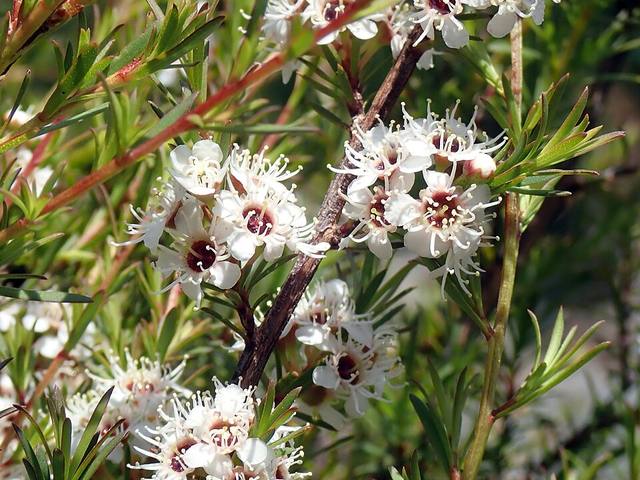
Mānuka's taller cousin: a nurse tree that shelters young forest and feeds bees in a white December haze.
Hardiness: zones 8 to 10
Light: full sun
Size: about 30 ft tall, 12 ft wide
From: Aotearoa New Zealand
Drought-hardy once established
Here: Too tender to overwinter outdoors on the Lake Erie shore (zone 6b to 7a): grow it in a pot and bring it in, or treat it as an annual.
Good for: pollinators, wildlife, mulch and biomass, traditional use.
Native to: Aotearoa New Zealand. Hardy in zones 8 to 10.
The story
Kānuka grows taller and softer than mānuka and lives longer. Its hard wood was shaped into paddles, weapons and tools, and its leaves have a place in rongoā, the traditional Māori healing practice. It covers cleared hills and shelters the forest that will replace it.
Planting
Full sun and well-drained soil. It takes wind, drought and poor ground.
Growing
No care at all. Trim lightly after flowering if you want to.
Harvest and use
A snowfall of small white flowers in early summer for bees. A nurse tree and a fast shelter belt.
What to watch for
It burns readily, so keep it back from buildings in dry country.
Safety
Medicinal uses here are shared as history, not advice. Kitchen amounts are fine for most people, but teas, tinctures and supplements can interact with medicines and aren't safe for everyone, especially in pregnancy, while breastfeeding, for children, or with liver or kidney problems. Ask a doctor or pharmacist before taking any plant as medicine.
See if Kānuka fits your yard
Free planner: enter your ZIP for frost dates, climate fit and a sowing calendar. No account, no ads, no tracking cookies.
More helper plants for soil, wildlife and biomass
- Cape aloe (bitter aloe)
- African wormwood (wilde-als)
- Canelo (Winter's bark)
- Caucasian linden
- Yar (highland casuarina)
- Gum arabic tree
General guidance, not professional advice. Conditions vary by yard and year; for local specifics ask your county extension office. Never eat a wild plant you cannot identify with certainty. Traditional uses are shared as history, not medical advice. © 2026 Sean Priest · Irie Orchard. Terms & credits · Privacy · Home