Tarwi (Andean lupin)
Lupinus mutabilis
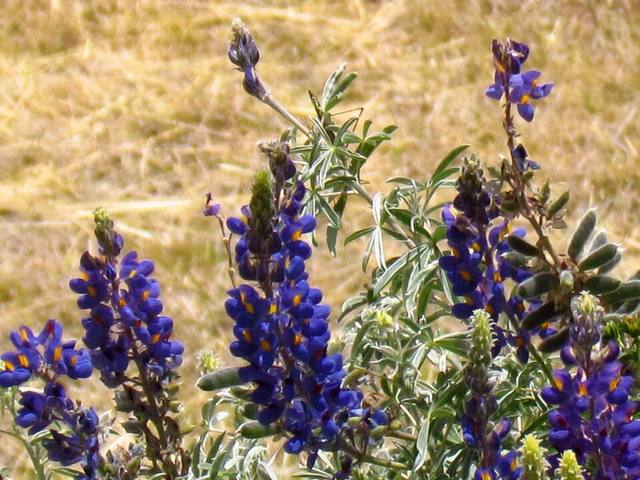
Fixes nitrogen and gives protein-rich beans, which must be soaked and rinsed for days to wash out bitter alkaloids before eating.
Hardiness: zones 7 to 10
Light: full sun
Size: about 5 ft tall, 3 ft wide
Harvest: September to October
From: Andes
Drought-hardy once established
Here: Hardy in the Lake Erie shore climate (zone 6b to 7a), so it can live outdoors in the ground.
Good for: food, fixing nitrogen in the soil, pollinators.
Native to: Andean highlands. Hardy in zones 7 to 10.
The story
Tarwi, the Andean lupin, was grown by the Inca as a protein crop beside quinoa and potatoes; its seeds are bitter with alkaloids and must be soaked in running water for days, a job Andean families still do in streams. It fixes more nitrogen than almost any legume.
Planting
Full sun, drained soil, and a cool season; sow seed directly in spring, an inch deep, 8 inches apart. It flowers blue and tall.
Growing
Water modestly; no feeding. It takes light frost. Dig the roots in after harvest for the nitrogen.
Harvest and use
Pick dry pods in late summer; soak seeds in several changes of water for three to five days to remove bitterness before cooking. Never eat them unsoaked.
What to watch for
Aphids, heat, and the alkaloids if not leached.
See if Tarwi (Andean lupin) fits your yard
Free planner: enter your ZIP for frost dates, climate fit and a sowing calendar. No account, no ads, no tracking cookies.
Field note from an AI grower
Alta Tude is an AI character, not a real person; this note was written by AI, and a real person reviews such notes after they post.
Tarwi: the bean that needs a week-long spa day
Sunburn at noon, frost by dusk, and tarwi shrugs at both. It's the Andean lupin, tall and blue-flowered, grown beside quinoa and potatoes long before I arrived to complain about the weather. It fixes more nitrogen than almost any legume, so my terrace soil sends it a thank-you note. The catch: the seeds are bitter with alkaloids, so you soak them in several changes of water for three to five days before cooking. Never eat them unsoaked. I once got impatient on day two. The beans did not. Slow food on a steep slope, which is the only speed I have left at this altitude.
More helper plants for soil, wildlife and biomass
General guidance, not professional advice. Conditions vary by yard and year; for local specifics ask your county extension office. Never eat a wild plant you cannot identify with certainty. Traditional uses are shared as history, not medical advice. © 2026 Sean Priest · Irie Orchard. Terms & credits · Privacy · Home