Partridge pea
Chamaecrista fasciculata
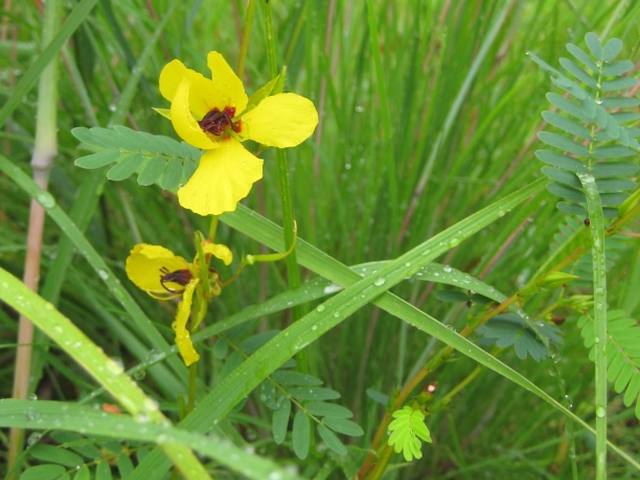
A self-sowing native annual that fixes nitrogen and feeds bumblebees, quail and sulphur butterflies.
Hardiness: zones 3 to 9
Light: full sun
Size: about 2 ft tall, 1.5 ft wide
From: E. and central North America
Drought-hardy once established
Here: Hardy in the Lake Erie shore climate (zone 6b to 7a), so it can live outdoors in the ground.
Good for: fixing nitrogen in the soil, pollinators, wildlife.
Native to: Northeast, Southeast, Midwest & Great Lakes, Great Plains & Texas, Eastern Canada. Hardy in zones 3 to 9.
The story
Partridge pea is an annual legume of sandy roadsides and old fields. It keeps a second nectar supply in tiny glands on its leaf stalks, which recruits ants and wasps as bodyguards. Touch a leaf and it folds slowly shut.
Planting
Sow scratched seed in fall or early spring on bare, sunny, poor soil.
Growing
None. It reseeds itself each year where the soil stays open.
Harvest and use
Buzz pollination by bumblebees, food for sulphur butterfly caterpillars, hard seed for quail through winter, and nitrogen for the soil.
What to watch for
It can crowd out small neighbors in a new planting, then settles down.
See if Partridge pea fits your yard
Free planner: enter your ZIP for frost dates, climate fit and a sowing calendar. No account, no ads, no tracking cookies.
More helper plants for soil, wildlife and biomass
General guidance, not professional advice. Conditions vary by yard and year; for local specifics ask your county extension office. Never eat a wild plant you cannot identify with certainty. Traditional uses are shared as history, not medical advice. © 2026 Sean Priest · Irie Orchard. Terms & credits · Privacy · Home