Alfalfa
Medicago sativa
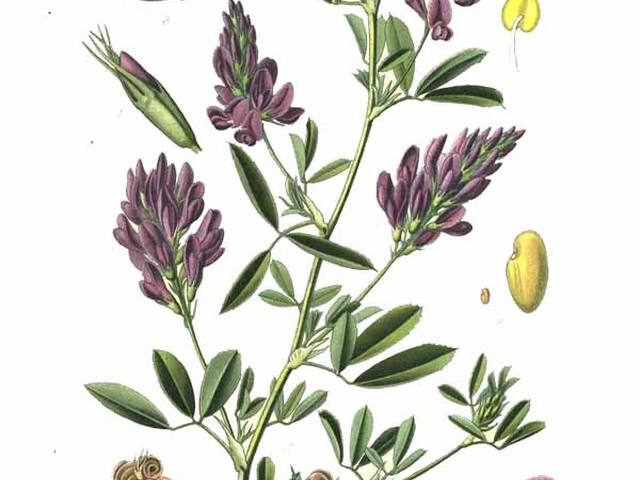
Roots reach down many feet to bring up minerals; chop it for mulch.
Hardiness: zones 3 to 9
Light: full sun
Size: about 3 ft tall, 2 ft wide
From: SW Asia
Drought-hardy once established
Here: Hardy in the Lake Erie shore climate (zone 6b to 7a), so it can live outdoors in the ground.
Good for: fixing nitrogen in the soil, mining nutrients for the compost pile, pollinators.
Hardy in zones 3 to 9.
The story
Alfalfa was first farmed in ancient Persia to feed horses, and its Arabic name means the best fodder. Its roots commonly go down fifteen feet and have been traced far deeper.
Planting
Full sun and deep, well-drained soil that is not acid. Sow in spring or late summer with the right inoculant.
Growing
Cut it three or four times a year at early bloom. A stand lasts five years or more.
Harvest and use
A nitrogen fixer and a mulch factory: lay the cuttings under fruit trees or add them to the compost, where they heat a pile fast. Bees work the purple flowers.
What to watch for
It will not grow where alfalfa just grew; rotate. It hates wet feet.
See if Alfalfa fits your yard
Free planner: enter your ZIP for frost dates, climate fit and a sowing calendar. No account, no ads, no tracking cookies.
More helper plants for soil, wildlife and biomass
General guidance, not professional advice. Conditions vary by yard and year; for local specifics ask your county extension office. Never eat a wild plant you cannot identify with certainty. Traditional uses are shared as history, not medical advice. © 2026 Sean Priest · Irie Orchard. Terms & credits · Privacy · Home