Daikon (tillage radish)
Raphanus sativus var. longipinnatus
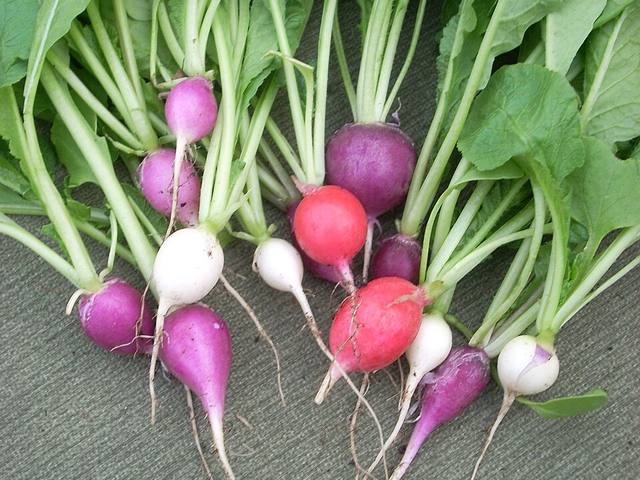
Its long root breaks up compacted soil, then rots in place over winter.
Hardiness: zones 2 to 11
Light: full sun
Size: about 1.5 ft tall, 0.5 ft wide
Harvest: October to November
From: E. Asia
Here: Hardy in the Lake Erie shore climate (zone 6b to 7a), so it can live outdoors in the ground.
Good for: food, mining nutrients for the compost pile.
Native to: East Asia. Hardy in zones 2 to 11.
The story
Daikon has been grown in East Asia for 2,000 years and is the most eaten vegetable in Japan, pickled, grated and simmered; farmers worldwide now sow it as a tillage radish whose deep roots break hardpan and rot into channels for the next crop.
Planting
Full sun, loose deep soil; sow directly in late summer for autumn roots, half an inch deep, thinned to 6 inches. As a cover crop, broadcast in late summer and let frost kill it.
Growing
Water steadily; fast growth makes mild roots. No feeding. It bolts if sown in spring.
Harvest and use
Pull roots at a foot or more, 60 days; store cold for months. Greens are edible cooked.
What to watch for
Flea beetles, root maggots, and the smell of a winter-killed cover crop.
See if Daikon (tillage radish) fits your yard
Free planner: enter your ZIP for frost dates, climate fit and a sowing calendar. No account, no ads, no tracking cookies.
More helper plants for soil, wildlife and biomass
General guidance, not professional advice. Conditions vary by yard and year; for local specifics ask your county extension office. Never eat a wild plant you cannot identify with certainty. Traditional uses are shared as history, not medical advice. © 2026 Sean Priest · Irie Orchard. Terms & credits · Privacy · Home