Hairy vetch
Vicia villosa
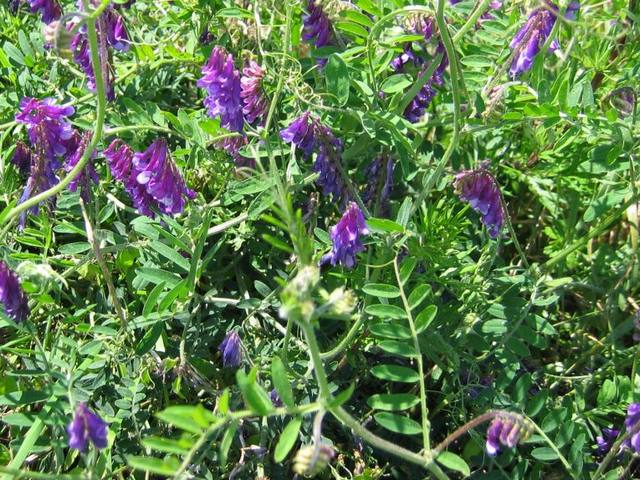
A cover crop that adds a lot of nitrogen; mow before it sets seed.
Hardiness: zones 4 to 9
Light: full sun
Size: about 3 ft tall, 1 ft wide
From: Europe and W. Asia
Here: Hardy in the Lake Erie shore climate (zone 6b to 7a), so it can live outdoors in the ground.
Good for: fixing nitrogen in the soil.
Native to: Temperate Europe, Mediterranean. Hardy in zones 4 to 9.
The story
Hairy vetch is the hardiest of the winter cover legumes and one of the most generous, able to leave a hundred pounds or more of nitrogen per acre for the crop that follows.
Planting
Sow in late summer to early fall, often with rye, which gives the vines something to climb.
Growing
It grows slowly in fall and takes off in spring. Cut it at early bloom and leave it as mulch.
Harvest and use
Tomatoes planted straight into mown vetch are a well-tested trick: the mulch feeds them and keeps the soil cool.
What to watch for
Cut it before it seeds. Hard seed can sprout for years, and it spreads along roadsides in some regions.
See if Hairy vetch fits your yard
Free planner: enter your ZIP for frost dates, climate fit and a sowing calendar. No account, no ads, no tracking cookies.
More helper plants for soil, wildlife and biomass
General guidance, not professional advice. Conditions vary by yard and year; for local specifics ask your county extension office. Never eat a wild plant you cannot identify with certainty. Traditional uses are shared as history, not medical advice. © 2026 Sean Priest · Irie Orchard. Terms & credits · Privacy · Home