Milkweed
Asclepias spp.
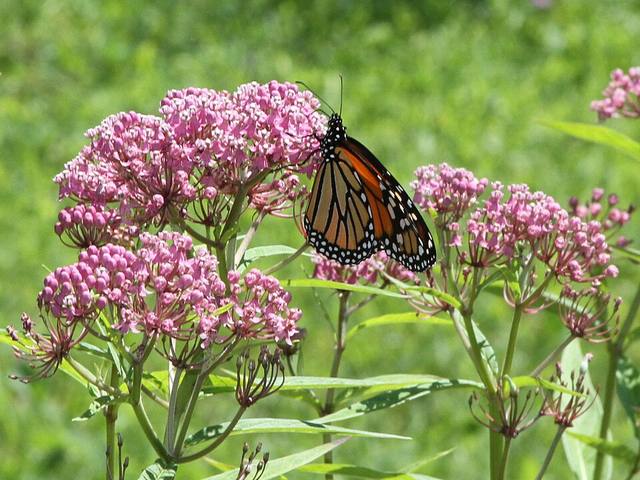
The monarch butterfly's only host plant.
Hardiness: zones 3 to 9
Light: full sun
Size: about 3 ft tall, 2 ft wide
From: North America
Drought-hardy once established
Here: Hardy in the Lake Erie shore climate (zone 6b to 7a), so it can live outdoors in the ground.
Good for: pollinators, butterfly and moth caterpillars.
Native to: Northeast, Southeast, Midwest & Great Lakes, Great Plains & Texas, Rockies & Great Basin, Desert Southwest, Pacific Northwest, California, Eastern Canada, Western Canada. Hardy in zones 3 to 9.
The story
Swamp milkweed, butterfly weed and common milkweed are all Ohio natives. In 1944 American schoolchildren collected milkweed pods so the floss could stuff Navy life jackets.
Planting
Full sun. Soil: swamp milkweed likes moist clay; butterfly weed likes dry, lean soil (pH 5.5–7.5). Spacing: 2 ft. Pollination: insect-pollinated; bees and butterflies.
Growing
Water: depends on species. Winter: Leave pods to split and seed. Spring: Emerges late (May). Mark the spot so you don't dig it up. Summer: Check leaves for monarch eggs and caterpillars. Don't spray anything. Fall: Collect pods to share seed.
Harvest and use
Harvest: Pods split in fall to share seed. First crop: blooms year 2.
What to watch for
Orange milkweed aphids (just leave them; ladybugs come).
See if Milkweed fits your yard
Free planner: enter your ZIP for frost dates, climate fit and a sowing calendar. No account, no ads, no tracking cookies.
More helper plants for soil, wildlife and biomass
General guidance, not professional advice. Conditions vary by yard and year; for local specifics ask your county extension office. Never eat a wild plant you cannot identify with certainty. Traditional uses are shared as history, not medical advice. © 2026 Sean Priest · Irie Orchard. Terms & credits · Privacy · Home