Borage
Borago officinalis
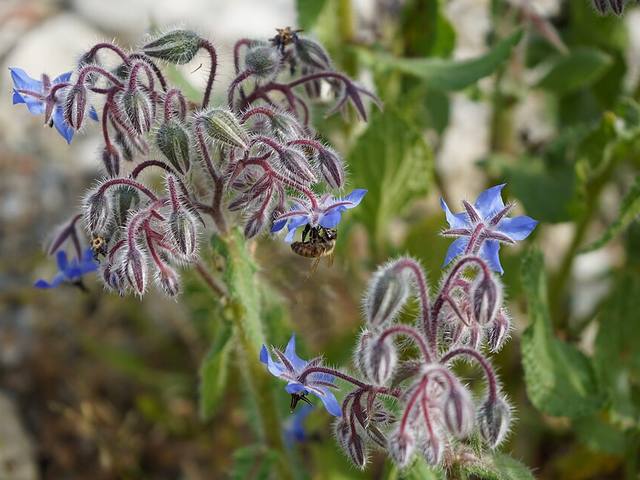
Blue star flowers that bees can't resist.
Hardiness: zones 3 to 10
Light: full sun
Size: about 2.5 ft tall, 2 ft wide
Harvest: June to September
From: Mediterranean
Drought-hardy once established
Here: Hardy in the Lake Erie shore climate (zone 6b to 7a), so it can live outdoors in the ground.
Good for: food, pollinators.
Native to: Mediterranean. Hardy in zones 3 to 10.
The story
Borage comes from the Mediterranean and has been tucked into gardens since Roman times, when it was dropped into wine for courage. The flowers refill with nectar every few minutes, which is why a plant in bloom is never without a bee.
Planting
Sow seed where it is to grow after the last frost, half an inch deep in sun. It has a taproot and dislikes being moved.
Growing
Water in dry spells and prop up floppy plants. Once you have grown it, it will sow itself every year after.
Harvest and use
The blue star flowers taste faintly of cucumber: float them in drinks, freeze them in ice cubes, scatter them on salads. Young leaves are edible too, if bristly.
What to watch for
It self-sows freely. Pull the extras while they are small.
See if Borage fits your yard
Free planner: enter your ZIP for frost dates, climate fit and a sowing calendar. No account, no ads, no tracking cookies.
More helper plants for soil, wildlife and biomass
General guidance, not professional advice. Conditions vary by yard and year; for local specifics ask your county extension office. Never eat a wild plant you cannot identify with certainty. Traditional uses are shared as history, not medical advice. © 2026 Sean Priest · Irie Orchard. Terms & credits · Privacy · Home