Carolina rose
Rosa carolina
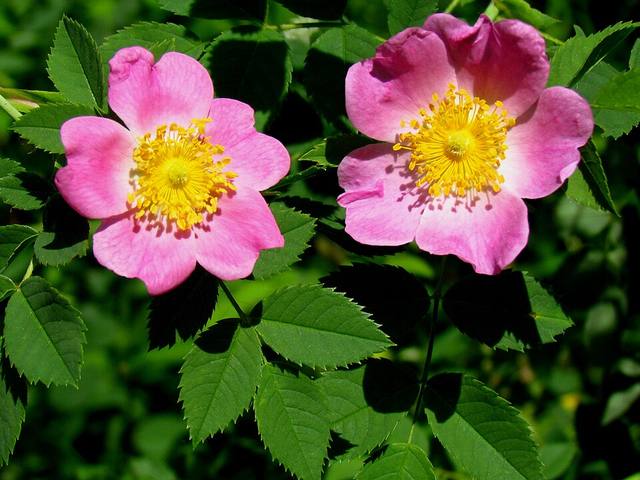
A low wild rose with edible hips; the petals make a fine syrup.
Hardiness: zones 4 to 9
Light: full sun
Size: about 3 ft tall, 4 ft wide
Harvest: September to October
From: E. North America
Drought-hardy once established
Here: Hardy in the Lake Erie shore climate (zone 6b to 7a), so it can live outdoors in the ground.
Good for: food, pollinators, wildlife.
Native to: Northeast, Southeast, Midwest & Great Lakes, Great Plains & Texas, Eastern Canada. Hardy in zones 4 to 9.
The story
The pasture rose of the East was used by Cherokee, Chippewa and other nations for hips, petals and root medicine; the hips, rich in vitamin C, were eaten in winter when little else was fresh. It is the low wild rose of old fields and roadsides.
Planting
Full sun, any drained soil, even dry or poor. Plant in spring; a 3-foot suckering shrub, good for banks and hedges.
Growing
Water the first year, then nothing. Cut old canes every few years. Nearly thornless compared with others.
Harvest and use
Hips ripen red in autumn; halve, scrape out the seeds and hairs, and dry or simmer for tea, syrup or jelly. Petals in early summer.
What to watch for
Rose rosette disease where present; Japanese beetles on flowers.
See if Carolina rose fits your yard
Free planner: enter your ZIP for frost dates, climate fit and a sowing calendar. No account, no ads, no tracking cookies.
More native and wild plants
General guidance, not professional advice. Conditions vary by yard and year; for local specifics ask your county extension office. Never eat a wild plant you cannot identify with certainty. Traditional uses are shared as history, not medical advice. © 2026 Sean Priest · Irie Orchard. Terms & credits · Privacy · Home