Māmaki
Pipturus albidus
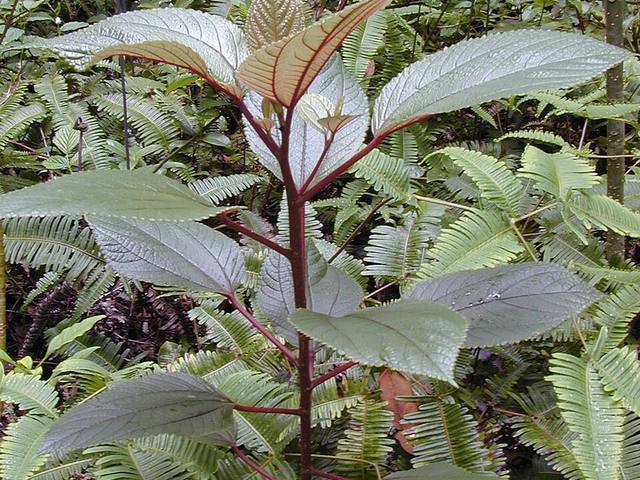
Hawaiian tea plant and host to the Kamehameha butterfly.
Hardiness: zones 10 to 12
Light: part shade
Size: about 10 ft tall, 8 ft wide
Harvest: year-round
From: Hawaiʻi
Here: Too tender to overwinter outdoors on the Lake Erie shore (zone 6b to 7a): grow it in a pot and bring it in, or treat it as an annual.
Good for: food, butterfly and moth caterpillars, traditional use.
Native to: Hawaiʻi & Pacific Islands. Hardy in zones 10 to 12.
The story
Māmaki is a Hawaiian nettle without the sting, endemic to the islands, whose leaves Hawaiians steeped as a tonic tea and whose bark was beaten into kapa cloth. Hawaiian farms now dry the leaves commercially.
Planting
Part shade, moist rich soil, warmth and humidity; a Hawaiian forest shrub to 15 feet. Plant from seed or cutting in a sheltered spot.
Growing
Keep moist and mulched, and prune to keep the leaves in reach. It is the host plant of the Kamehameha butterfly, so expect some chewed leaves.
Harvest and use
Pick mature leaves any time, dry them in shade, and steep for a mild, slightly sweet tea. The small white fruit is edible.
What to watch for
Drought, wind, and cold; nothing else of note.
Safety
Medicinal uses here are shared as history, not advice. Kitchen amounts are fine for most people, but teas, tinctures and supplements can interact with medicines and aren't safe for everyone, especially in pregnancy, while breastfeeding, for children, or with liver or kidney problems. Ask a doctor or pharmacist before taking any plant as medicine.
See if Māmaki fits your yard
Free planner: enter your ZIP for frost dates, climate fit and a sowing calendar. No account, no ads, no tracking cookies.
More native and wild plants
General guidance, not professional advice. Conditions vary by yard and year; for local specifics ask your county extension office. Never eat a wild plant you cannot identify with certainty. Traditional uses are shared as history, not medical advice. © 2026 Sean Priest · Irie Orchard. Terms & credits · Privacy · Home