New England aster
Symphyotrichum novae-angliae
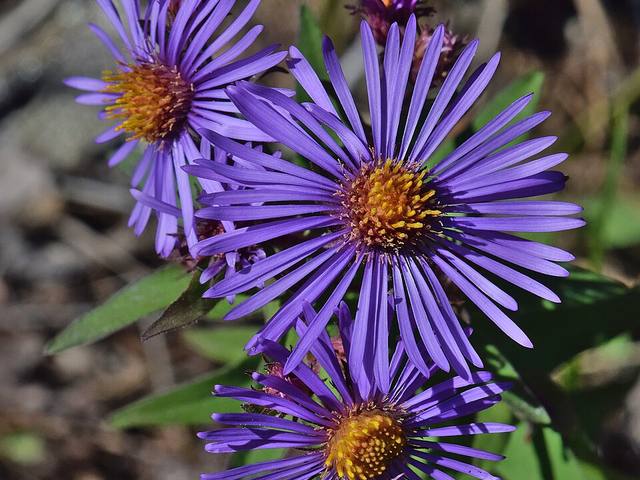
Purple daisies in September, the last big meal for migrating monarchs.
Hardiness: zones 3 to 8
Light: full sun
Size: about 4 ft tall, 3 ft wide
From: E. North America
Here: Hardy in the Lake Erie shore climate (zone 6b to 7a), so it can live outdoors in the ground.
Good for: pollinators, butterfly and moth caterpillars.
Native to: Northeast, Midwest & Great Lakes, Southeast, Great Plains & Texas, Eastern Canada, Rockies & Great Basin. Hardy in zones 3 to 8.
The story
Native across eastern North America, including Lake Erie wet meadows and roadsides. British gardeners call American asters 'Michaelmas daisies' because they bloom around Michaelmas (Sept 29).
Planting
Full sun. Soil: moist to average; likes clay (pH 5.5–7.5). Spacing: 2 ft. Pollination: insect-pollinated; late-season bee food.
Growing
Water: average. Winter: Leave the stems for overwintering insects. Spring: Divide every few years. Summer: Pinch back by half before July 4 for a bushier, shorter plant. Fall: Peak bloom, purple with gold centers.
Harvest and use
Harvest: Fall bloom; seeds feed birds. First crop: blooms year 1–2.
What to watch for
Powdery mildew on lower leaves (harmless).
See if New England aster fits your yard
Free planner: enter your ZIP for frost dates, climate fit and a sowing calendar. No account, no ads, no tracking cookies.
More native and wild plants
General guidance, not professional advice. Conditions vary by yard and year; for local specifics ask your county extension office. Never eat a wild plant you cannot identify with certainty. Traditional uses are shared as history, not medical advice. © 2026 Sean Priest · Irie Orchard. Terms & credits · Privacy · Home