Butterfly milkweed
Asclepias tuberosa
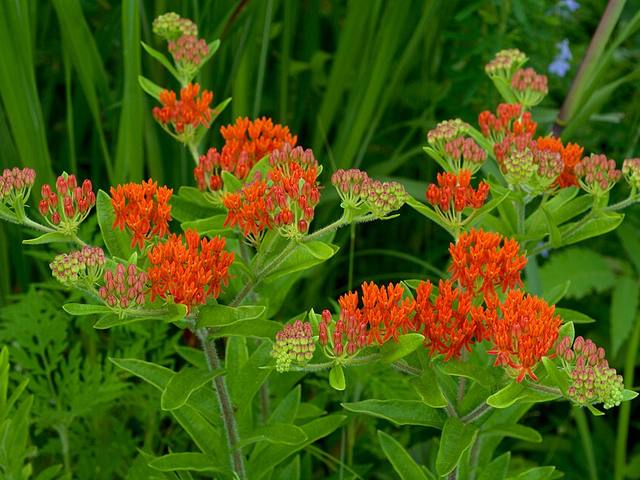
Bright orange, dry-tolerant monarch host for sunny beds.
Hardiness: zones 3 to 9
Light: full sun
Size: about 2 ft tall, 2 ft wide
From: E. and central North America
Drought-hardy once established
Here: Hardy in the Lake Erie shore climate (zone 6b to 7a), so it can live outdoors in the ground.
Good for: pollinators, butterfly and moth caterpillars.
Native to: Northeast, Southeast, Midwest & Great Lakes, Great Plains & Texas, Desert Southwest, Eastern Canada. Hardy in zones 3 to 9.
The story
Butterfly milkweed is the milkweed without the milk: its sap is clear. It grows a taproot like a carrot, which lets it laugh at drought, and which is the reason it sulks if you try to move it.
Planting
Full sun and dry, well-drained soil. Sow seed in fall or plant young plugs.
Growing
Mark the spot: it is among the last plants up in spring. No fertilizer, little water.
Harvest and use
Orange flowers from June to August for butterflies, bees and hummingbirds. Monarch caterpillars eat the leaves.
What to watch for
Orange aphids are ugly but rarely harmful; hose them off. Wet clay rots the root.
See if Butterfly milkweed fits your yard
Free planner: enter your ZIP for frost dates, climate fit and a sowing calendar. No account, no ads, no tracking cookies.
More native and wild plants
General guidance, not professional advice. Conditions vary by yard and year; for local specifics ask your county extension office. Never eat a wild plant you cannot identify with certainty. Traditional uses are shared as history, not medical advice. © 2026 Sean Priest · Irie Orchard. Terms & credits · Privacy · Home