Crowberry
Empetrum nigrum
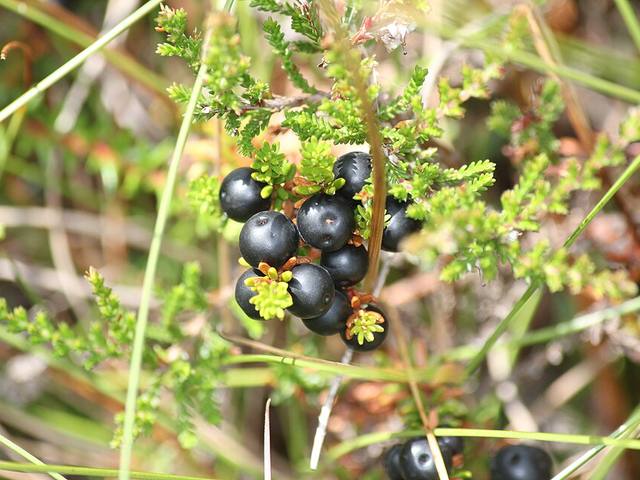
A tundra ground cover with juicy black berries for pies and birds.
Hardiness: zones 1 to 6
Light: full sun
Size: about 0.5 ft tall, 2 ft wide
Harvest: August to September
From: Arctic and subarctic
Here: Hardy in the Lake Erie shore climate (zone 6b to 7a), so it can live outdoors in the ground.
Good for: food, wildlife.
Native to: Alaska, Western Canada, Eastern Canada, Northeast, Northern Europe & the taiga. Hardy in zones 1 to 6.
The story
Crowberry grows on the tundra and coasts of the far north and was a staple of Inuit, Sámi and Aleut diets, stored frozen in grease or seal oil through the winter; in Greenland and Alaska it is still gathered by the bucket.
Planting
Full sun, acid peaty or sandy soil, and a cold climate; a 6-inch evergreen mat. Plant in spring with cloudberry and lingonberry.
Growing
Keep moist with rainwater and leave it alone; it dislikes heat, lime and fuss.
Harvest and use
Berries ripen black in late summer and hold through winter; mild, slightly resinous, better after frost. Eat fresh, cook with other berries, or juice.
What to watch for
Heat and alkaline soil.
See if Crowberry fits your yard
Free planner: enter your ZIP for frost dates, climate fit and a sowing calendar. No account, no ads, no tracking cookies.
More native and wild plants
General guidance, not professional advice. Conditions vary by yard and year; for local specifics ask your county extension office. Never eat a wild plant you cannot identify with certainty. Traditional uses are shared as history, not medical advice. © 2026 Sean Priest · Irie Orchard. Terms & credits · Privacy · Home