Chiuri (Indian butter tree)
Diploknema butyracea
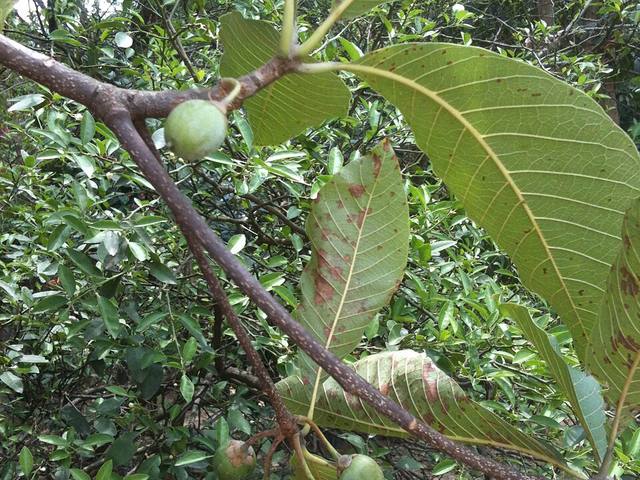
Sweet fruit, winter nectar for bees, and seeds pressed into a butter that Chepang families give as a daughter's dowry.
Hardiness: zones 9 to 11
Light: full sun
Size: about 60 ft tall, 40 ft wide
Harvest: June to August
From: Himalayan foothills, from Uttarakhand to Bhutan
Drought-hardy once established
Here: Too tender to overwinter outdoors on the Lake Erie shore (zone 6b to 7a): grow it in a pot and bring it in, or treat it as an annual.
Good for: food, pollinators, wildlife.
Native to: Himalaya & Indian hill country. Hardy in zones 9 to 11.
The story
For the Chepang people of central Nepal, the chiuri tree is wealth. Families own individual trees, give them to daughters at marriage, and press the seeds for a white butter used for cooking, for lamps and on chapped skin.
Planting
Sun and well-drained soil on a warm slope in a nearly frost-free climate.
Growing
Water young trees. It is slow to start and bears for generations.
Harvest and use
Sweet, juicy fruit in early summer. The winter flowers give a prized honey, and the seeds give chiuri butter.
What to watch for
Frost. It can take seven to ten years to bear.
See if Chiuri (Indian butter tree) fits your yard
Free planner: enter your ZIP for frost dates, climate fit and a sowing calendar. No account, no ads, no tracking cookies.
More tropical and subtropical food plants
- Timla (Roxburgh fig)
- Kakadu plum (gubinge)
- Lemon aspen
- Aguaje (moriche palm)
- Nipa palm (golpata)
- Betel leaf (paan)
General guidance, not professional advice. Conditions vary by yard and year; for local specifics ask your county extension office. Never eat a wild plant you cannot identify with certainty. Traditional uses are shared as history, not medical advice. © 2026 Sean Priest · Irie Orchard. Terms & credits · Privacy · Home