Nipa palm (golpata)
Nypa fruticans
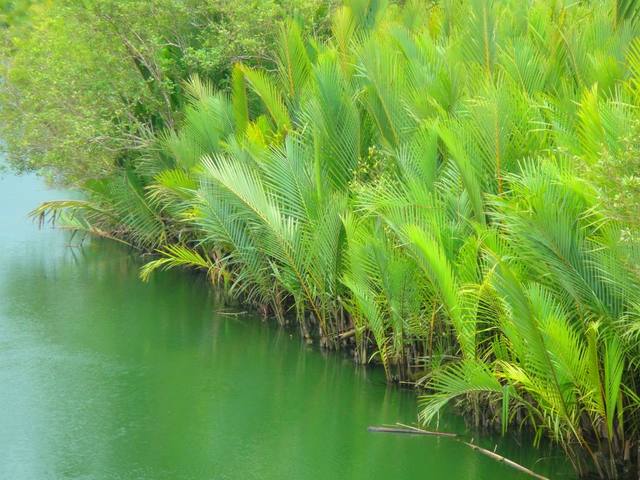
Leaves for thatch, sweet sap for sugar and jelly-like young seeds; it grows with its feet in brackish water.
Hardiness: zones 11 to 12
Light: full sun
Size: about 20 ft tall, 15 ft wide
Harvest: year-round
From: Mangrove coasts of South and Southeast Asia
Here: Too tender to overwinter outdoors on the Lake Erie shore (zone 6b to 7a): grow it in a pot and bring it in, or treat it as an annual.
Good for: food, screens and hedges.
Native to: South & Southeast Asian tropics, East Asia. Hardy in zones 11 to 12.
The story
Nipa is the mangrove palm of Asian river mouths, called golpata in Bengal. Its trunk lies under the mud and only the great feather leaves rise up, which is why it is the thatch of delta villages from Bangladesh to the Philippines.
Planting
Brackish, tidal mud in full sun, in the frost-free tropics. Plant the floating fruits straight into the mud at the water's edge.
Growing
Needs regular tides and slightly salty water; it won't grow in a dry garden. Cut a few old leaves each year for thatch.
Harvest and use
Leaves for roofs and walls; the cut flower stalk drips sweet sap for sugar, vinegar and toddy; the young seeds are a jelly-like snack.
What to watch for
Only for real tidal shores. Crabs and shipworms in the fruit; overharvesting the stalks.
See if Nipa palm (golpata) fits your yard
Free planner: enter your ZIP for frost dates, climate fit and a sowing calendar. No account, no ads, no tracking cookies.
More tropical and subtropical food plants
General guidance, not professional advice. Conditions vary by yard and year; for local specifics ask your county extension office. Never eat a wild plant you cannot identify with certainty. Traditional uses are shared as history, not medical advice. © 2026 Sean Priest · Irie Orchard. Terms & credits · Privacy · Home