Grumixama (Brazil cherry)
Eugenia brasiliensis
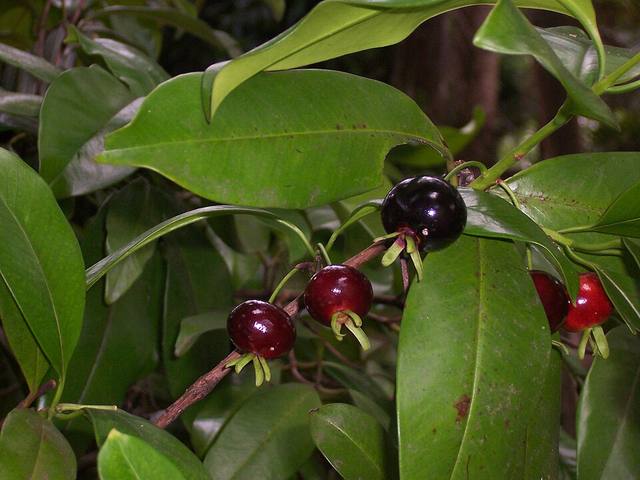
Glossy dark cherries that all ripen in a few weeks of early summer; the birds race you for them.
Hardiness: zones 9 to 11
Light: part shade
Size: about 25 ft tall, 15 ft wide
Harvest: May to July
From: Atlantic Forest, Bahia to Rio Grande do Sul
Here: Too tender to overwinter outdoors on the Lake Erie shore (zone 6b to 7a): grow it in a pot and bring it in, or treat it as an annual.
Good for: food, pollinators, wildlife.
Native to: Atlantic Forest of Brazil. Hardy in zones 9 to 11.
The story
The name comes from the Tupi guamichã, roughly 'sticks to the tongue'. Grumixama grows wild from Bahia to Rio Grande do Sul and was a backyard fruit across São Paulo and Rio before city lots shrank. Slow Food lists it in its Ark of Taste as a fruit at risk of being forgotten.
Planting
Sun or the bright shade of taller trees; rich, moist, slightly acid soil with plenty of leaf litter. Grows from fresh seed (it does not keep) and starts bearing in about five years.
Growing
Mulch deeply and water through dry spells, especially while it flowers. Handles a light frost once established. Needs little pruning beyond shaping.
Harvest and use
Dark purple-black cherries ripen all at once over a few early-summer weeks. Eat fresh, or cook into jam, syrup and sauce; the colour comes from anthocyanins.
What to watch for
Birds find the crop first: net a branch or pick daily. Fruit bruises easily and keeps only a day or two.
See if Grumixama (Brazil cherry) fits your yard
Free planner: enter your ZIP for frost dates, climate fit and a sowing calendar. No account, no ads, no tracking cookies.
More tropical and subtropical food plants
General guidance, not professional advice. Conditions vary by yard and year; for local specifics ask your county extension office. Never eat a wild plant you cannot identify with certainty. Traditional uses are shared as history, not medical advice. © 2026 Sean Priest · Irie Orchard. Terms & credits · Privacy · Home