Aguaje (moriche palm)
Mauritia flexuosa
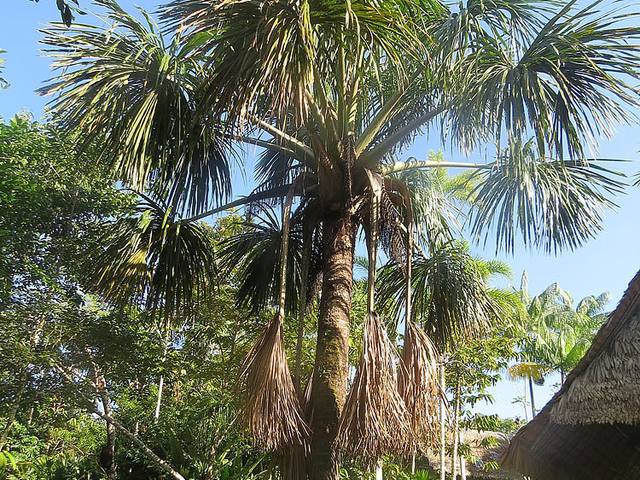
A palm of flooded swamps; the scaly maroon fruit has orange flesh rich in vitamin A. Female palms fruit, so plant a pair.
Hardiness: zones 11 to 12
Light: full sun
Size: about 80 ft tall, 25 ft wide
Harvest: year-round
From: Amazon and Orinoco basins
Here: Too tender to overwinter outdoors on the Lake Erie shore (zone 6b to 7a): grow it in a pot and bring it in, or treat it as an annual.
Good for: food, wildlife.
Native to: Tropical South America. Hardy in zones 11 to 12.
The story
In Iquitos aguaje is everywhere: market sellers peel the scaly maroon fruit by the bucket, and the orange pulp becomes aguajina, a cold sweet drink, and ice cream. Aguaje palm swamps, called aguajales, cover huge areas of the Peruvian Amazon and store enormous amounts of carbon. Harvesters once often felled whole female palms to reach the fruit; climbing gear and planted palms are now encouraged so the swamps keep fruiting.
Planting
A palm for the hot, wet tropics only (zone 11 and up). Plant in full sun in wet or seasonally flooded ground; it is happy at the edge of a pond. Palms are male or female and you can't tell which until they flower, so plant three to five and keep a male and a female or two.
Growing
Keep the ground wet all year. Slow for the first few years, then tall and fast; expect fruit after about seven or eight years.
Harvest and use
Ripe fruit drops from huge hanging bunches. Soak it in warm water to soften, peel off the scales and eat the thin orange flesh fresh, blended into drinks or frozen into ice cream. The leaves give thatch and fibre.
What to watch for
Dry soil and any cold below about 50°F; palm weevils in damaged trunks.
See if Aguaje (moriche palm) fits your yard
Free planner: enter your ZIP for frost dates, climate fit and a sowing calendar. No account, no ads, no tracking cookies.
More tropical and subtropical food plants
General guidance, not professional advice. Conditions vary by yard and year; for local specifics ask your county extension office. Never eat a wild plant you cannot identify with certainty. Traditional uses are shared as history, not medical advice. © 2026 Sean Priest · Irie Orchard. Terms & credits · Privacy · Home