Date-plum (Caucasian persimmon)
Diospyros lotus
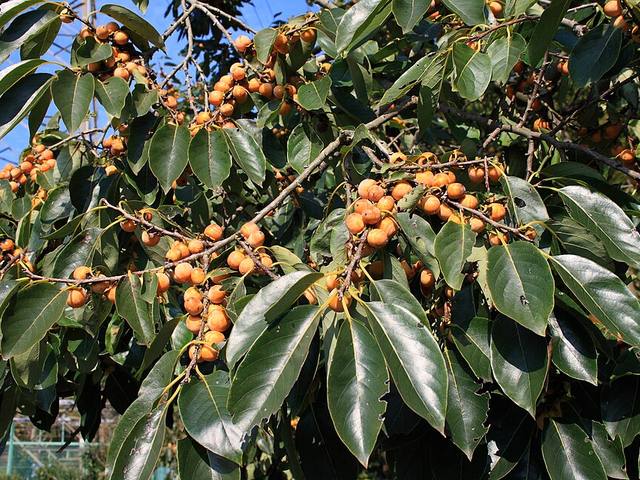
Cherry-sized persimmons that sweeten after frost and dry like dates; among the oldest fruits grown.
Hardiness: zones 6 to 9
Light: full sun
Size: about 30 ft tall, 20 ft wide
Harvest: October to November
From: Caucasus to China
Here: Hardy in the Lake Erie shore climate (zone 6b to 7a), so it can live outdoors in the ground.
Good for: food, wildlife, pollinators.
Native to: Caucasus, East Asia. Hardy in zones 6 to 9.
The story
The date-plum has been eaten from the Caucasus to China for thousands of years. Its Latin name, lotus, recalls the old idea that it was the fruit of forgetfulness in Greek legend. In Georgia and Azerbaijan the fruit is dried for winter.
Planting
Full sun and any soil that drains. It is tougher and hardier than the Asian persimmon and takes drought once established.
Growing
Most trees are male or female, so plant several or a grafted female. Little pruning is needed.
Harvest and use
Leave the small fruit on the tree until after frost, when it turns dark, soft and sweet. Eat fresh or dry it like dates.
What to watch for
Unripe fruit is mouth-puckering. It can seed around in warm regions; check locally first.
See if Date-plum (Caucasian persimmon) fits your yard
Free planner: enter your ZIP for frost dates, climate fit and a sowing calendar. No account, no ads, no tracking cookies.
More fruit trees
- Kei apple
- Ume (Japanese apricot)
- Tejocote (Mexican hawthorn)
- Waterberry (umdoni)
- Wild plum (umgwenya)
- Arrayán (Chilean myrtle)
General guidance, not professional advice. Conditions vary by yard and year; for local specifics ask your county extension office. Never eat a wild plant you cannot identify with certainty. Traditional uses are shared as history, not medical advice. © 2026 Sean Priest · Irie Orchard. Terms & credits · Privacy · Home