Desert date
Balanites aegyptiaca
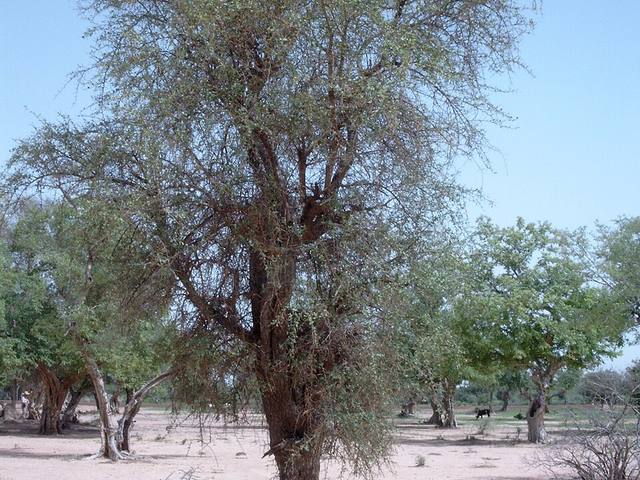
Thorny and nearly unkillable in drought; the sticky, date-like fruit and young leaves are eaten.
Hardiness: zones 9 to 12
Light: full sun
Size: about 25 ft tall, 20 ft wide
Harvest: November to March
From: Sahara, Sahel and Arabia
Drought-hardy once established
Here: Too tender to overwinter outdoors on the Lake Erie shore (zone 6b to 7a): grow it in a pot and bring it in, or treat it as an annual.
Good for: food, wildlife.
Native to: Sahara & Arabian deserts, African savannas & tropics. Hardy in zones 9 to 12.
The story
The desert date has fed the Sahara and Sahel since prehistory; Tutankhamun's tomb held its fruit, and Sahelian families still eat the sweet-bitter pulp, press oil from the kernel, and cook the leaves and flowers. It fruits in the dry season when nothing else does.
Planting
Full sun, dry sand or clay, heat, and no frost; thorny, slow, to 30 feet. Plant seed in place in arid, frost-free climates.
Growing
Water the first year, then nothing; it reaches deep water. No pruning. Drought and goats are its only companions.
Harvest and use
Fruit ripens yellow in the dry season; eat the pulp or soak it for a drink, crack the stone for the kernel oil. Young leaves and flowers are cooked greens.
What to watch for
Thorns, frost, and wet ground.
See if Desert date fits your yard
Free planner: enter your ZIP for frost dates, climate fit and a sowing calendar. No account, no ads, no tracking cookies.
More fruit trees
General guidance, not professional advice. Conditions vary by yard and year; for local specifics ask your county extension office. Never eat a wild plant you cannot identify with certainty. Traditional uses are shared as history, not medical advice. © 2026 Sean Priest · Irie Orchard. Terms & credits · Privacy · Home