Service tree
Sorbus domestica
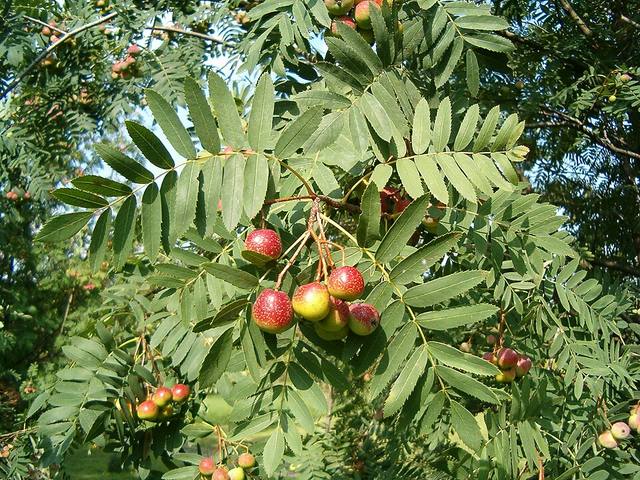
Little pear-shaped fruit eaten once bletted soft, like medlars; a rare, long-lived orchard tree.
Hardiness: zones 5 to 8
Light: full sun
Size: about 50 ft tall, 30 ft wide
Harvest: October to November
From: S. and central Europe
Drought-hardy once established
Here: Hardy in the Lake Erie shore climate (zone 6b to 7a), so it can live outdoors in the ground.
Good for: food, wildlife.
Native to: Temperate Europe, Mediterranean. Hardy in zones 5 to 8.
The story
The service tree was grown by the Romans and in monastery orchards for its pear- or apple-shaped fruit, bletted like medlar and made into a cider in Germany and Austria; it is one of Europe's rarest fruit trees now, with ancient specimens protected.
Planting
Full sun, drained soil; plant young; slow, to 50 feet and 300 years. Self-fertile.
Growing
Water the first summers, then little. No pruning. Patient growers wait 10 years for fruit.
Harvest and use
Fruit ripens brown in autumn; store until soft and bletted, then eat or press. Tart until bletted.
What to watch for
Fire blight; otherwise hardy.
See if Service tree fits your yard
Free planner: enter your ZIP for frost dates, climate fit and a sowing calendar. No account, no ads, no tracking cookies.
More fruit trees
General guidance, not professional advice. Conditions vary by yard and year; for local specifics ask your county extension office. Never eat a wild plant you cannot identify with certainty. Traditional uses are shared as history, not medical advice. © 2026 Sean Priest · Irie Orchard. Terms & credits · Privacy · Home