Desert hackberry
Celtis ehrenbergiana
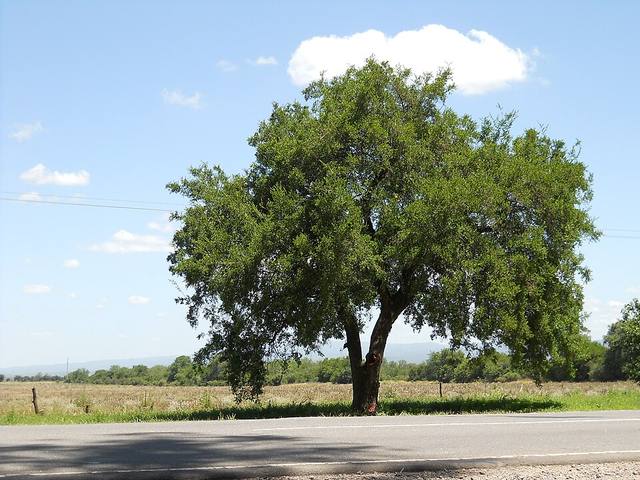
Sweet orange berries birds and people both like; the thicket shrub of desert washes.
Hardiness: zones 8 to 10
Light: full sun
Size: about 12 ft tall, 12 ft wide
Harvest: August to October
From: SW United States and Mexico
Here: Too tender to overwinter outdoors on the Lake Erie shore (zone 6b to 7a): grow it in a pot and bring it in, or treat it as an annual.
Good for: food, wildlife.
Native to: Desert Southwest, Great Plains & Texas. Hardy in zones 8 to 10.
The story
Desert hackberry berries were eaten fresh and dried by the Tohono O'odham, Seri and Apache, who also used the wood; the thicket shelters quail and the berries feed every bird in the wash. It is the hackberry of the hot deserts, evergreen and spiny.
Planting
Full sun, dry soil, heat, and light frost; plant in spring. A thorny shrub to 12 feet, good as a hedge.
Growing
Water the first year, then nothing. Clip to shape.
Harvest and use
Berries ripen orange in late summer and autumn; sweet, thin-fleshed, with a crunchy seed. Eat fresh or dry.
What to watch for
Thorns; nothing else.
See if Desert hackberry fits your yard
Free planner: enter your ZIP for frost dates, climate fit and a sowing calendar. No account, no ads, no tracking cookies.
More native and wild plants
- Banana yucca
- Texas persimmon
- Emory oak (bellota)
- Screwbean mesquite
- Hollyleaf cherry (islay)
- California wild grape
General guidance, not professional advice. Conditions vary by yard and year; for local specifics ask your county extension office. Never eat a wild plant you cannot identify with certainty. Traditional uses are shared as history, not medical advice. © 2026 Sean Priest · Irie Orchard. Terms & credits · Privacy · Home