English oak
Quercus robur
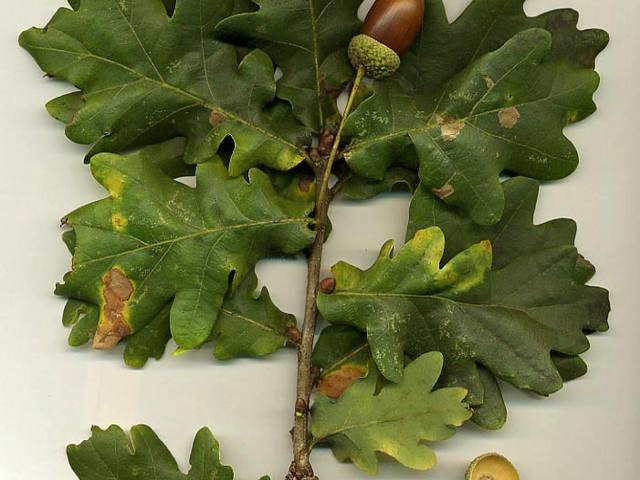
Hosts hundreds of insects, which makes it the backbone of a European woodland food web.
Hardiness: zones 4 to 8
Light: full sun
Size: about 80 ft tall, 70 ft wide
From: Europe to the Caucasus
Here: Hardy in the Lake Erie shore climate (zone 6b to 7a), so it can live outdoors in the ground.
Good for: wildlife, butterfly and moth caterpillars.
Native to: Temperate Europe. Hardy in zones 4 to 8.
The story
The English oak built the ships of the Royal Navy and the roofs of the cathedrals, and individual trees have stood for a thousand years. More kinds of insects live on it than on any other tree in Britain.
Planting
Full sun and deep, heavy soil. Plant an acorn where the tree is to stand, and protect it from mice and deer.
Growing
Water in the first summers. Be patient.
Harvest and use
Acorns for jays, which plant most of Europe's new oaks, and for pigs; caterpillars by the thousand for nesting birds.
What to watch for
Powdery mildew on young leaves. It needs a great deal of room.
See if English oak fits your yard
Free planner: enter your ZIP for frost dates, climate fit and a sowing calendar. No account, no ads, no tracking cookies.
More native and wild plants
- European crab apple
- Andean alder
- Native sarsaparilla (happy wanderer)
- Sassafras
- Nodding onion
- Blue vervain
General guidance, not professional advice. Conditions vary by yard and year; for local specifics ask your county extension office. Never eat a wild plant you cannot identify with certainty. Traditional uses are shared as history, not medical advice. © 2026 Sean Priest · Irie Orchard. Terms & credits · Privacy · Home