Nodding onion
Allium cernuum
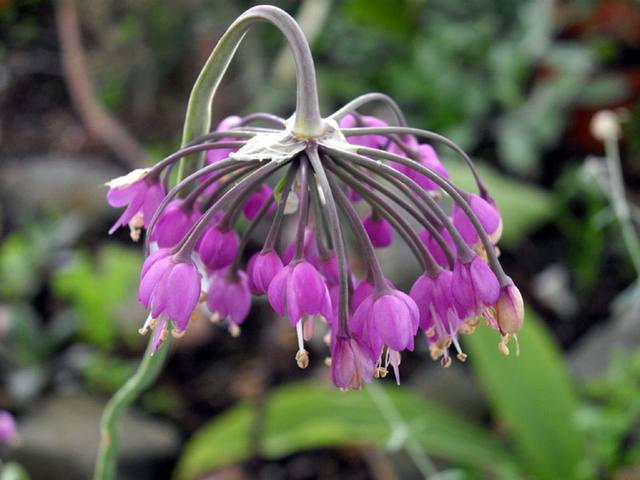
A native onion with nodding pink flowers bees adore; eat the leaves and small bulbs like chives.
Hardiness: zones 3 to 9
Light: full sun to part shade
Size: about 1.5 ft tall, 0.5 ft wide
Harvest: May to August
From: North America
Drought-hardy once established
Here: Hardy in the Lake Erie shore climate (zone 6b to 7a), so it can live outdoors in the ground.
Good for: food, pollinators.
Native to: Northeast, Southeast, Midwest & Great Lakes, Great Plains & Texas, Rockies & Great Basin, Desert Southwest, Pacific Northwest, Eastern Canada, Western Canada. Hardy in zones 3 to 9.
The story
Nodding onion was gathered across North America by Cherokee, Anishinaabe and Blackfoot peoples and eaten raw, cooked and in soups; Lewis and Clark ate it in Montana, and it is one of the easiest native edibles for a meadow or border.
Planting
Full sun or light shade, drained soil, even dry and poor. Plant bulbs or seed in spring or autumn, 6 inches apart; it clumps and self-sows.
Growing
Nothing beyond water the first year. Divide every few years. Leave seed heads for the look.
Harvest and use
Leaves in spring and summer, flowers in midsummer, bulbs any time, all with a mild onion flavour.
What to watch for
Nothing of note.
See if Nodding onion fits your yard
Free planner: enter your ZIP for frost dates, climate fit and a sowing calendar. No account, no ads, no tracking cookies.
More native and wild plants
- Blue vervain
- Culver's root
- Wild geranium
- Riverbank grape
- Holm oak (bellota oak)
- Mediterranean hackberry (nettle tree)
General guidance, not professional advice. Conditions vary by yard and year; for local specifics ask your county extension office. Never eat a wild plant you cannot identify with certainty. Traditional uses are shared as history, not medical advice. © 2026 Sean Priest · Irie Orchard. Terms & credits · Privacy · Home