Holm oak (bellota oak)
Quercus ilex
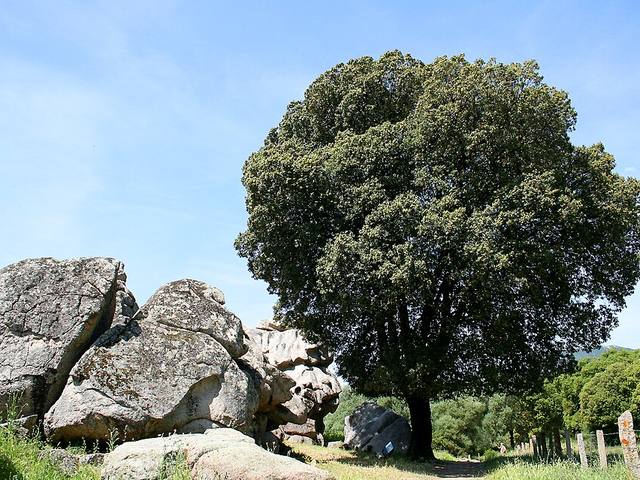
Evergreen oak of the dehesa; sweet acorns of Q. rotundifolia fatten Iberian pigs and are roasted like chestnuts.
Hardiness: zones 7 to 10
Light: full sun
Size: about 60 ft tall, 50 ft wide
Harvest: October to December
From: Mediterranean
Drought-hardy once established
Here: Hardy in the Lake Erie shore climate (zone 6b to 7a), so it can live outdoors in the ground.
Good for: food, wildlife.
Native to: Mediterranean. Hardy in zones 7 to 10.
The story
The acorns of the holm oak have fed Iberia since prehistory; sweet bellota acorns were ground into bread by Celtiberians and Moors and now fatten the black pigs of Extremadura whose ham sells for a fortune. The dehesa, oak pasture, is the oldest farmed landscape in Europe.
Planting
Full sun, dry drained soil, and a Mediterranean climate; slow, evergreen, 60 feet. Plant young; it dislikes moving.
Growing
Water the first two summers, then never. No pruning. It takes 20 years to bear well.
Harvest and use
Acorns fall in autumn; sweet varieties can be eaten roasted with little leaching, others need soaking to remove tannin. Grind for flour.
What to watch for
Oak decline in waterlogged soil; little else.
See if Holm oak (bellota oak) fits your yard
Free planner: enter your ZIP for frost dates, climate fit and a sowing calendar. No account, no ads, no tracking cookies.
More native and wild plants
- Mediterranean hackberry (nettle tree)
- Mastic (lentisk)
- Prickly wild rose
- Common hawthorn
- Black alder
- Apple berry
General guidance, not professional advice. Conditions vary by yard and year; for local specifics ask your county extension office. Never eat a wild plant you cannot identify with certainty. Traditional uses are shared as history, not medical advice. © 2026 Sean Priest · Irie Orchard. Terms & credits · Privacy · Home