Common hawthorn
Crataegus monogyna
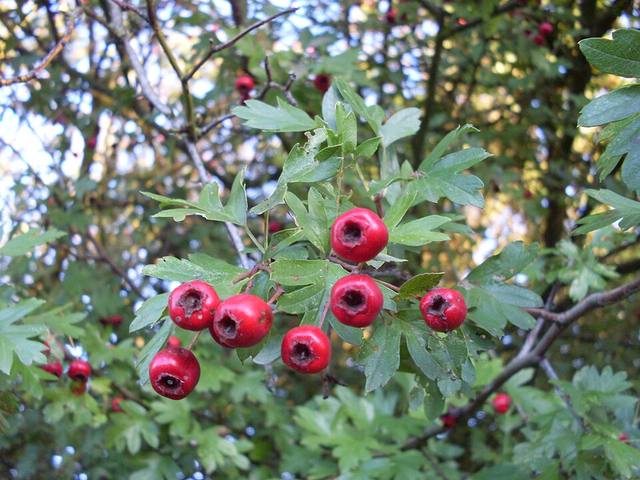
The backbone of English hedgerows; May blossom and red haws for jelly. It spreads in Australia, New Zealand and the Pacific Northwest, so plant it only where it is native.
Hardiness: zones 4 to 8
Light: full sun to part shade
Size: about 25 ft tall, 20 ft wide
Harvest: September to October
From: Europe and W. Asia
Drought-hardy once established
Here: Hardy in the Lake Erie shore climate (zone 6b to 7a), so it can live outdoors in the ground.
Good for: food, wildlife, pollinators, traditional use.
Native to: Temperate Europe, Mediterranean. Hardy in zones 4 to 8.
The story
Hawthorn has marked field boundaries in Europe since the Neolithic and was the May tree of spring festivals; its berries made jelly and ketchup, and its flowers and leaves, bread and cheese to country children, are still a heart medicine in herbal practice.
Planting
Full sun or part shade, any soil; plant bare-root in winter as a hedge, 12 inches apart, or as a 20-foot tree. Thorny and tough.
Growing
Water the first year, then nothing. Trim hedges after the birds have nested. No feeding.
Harvest and use
Young leaves in spring for salads; flowers for tea; haws in autumn for jelly, ketchup and wine. Haws are mealy raw.
What to watch for
Fire blight and leaf spot; mostly cosmetic.
Safety
Medicinal uses here are shared as history, not advice. Kitchen amounts are fine for most people, but teas, tinctures and supplements can interact with medicines and aren't safe for everyone, especially in pregnancy, while breastfeeding, for children, or with liver or kidney problems. Ask a doctor or pharmacist before taking any plant as medicine.
See if Common hawthorn fits your yard
Free planner: enter your ZIP for frost dates, climate fit and a sowing calendar. No account, no ads, no tracking cookies.
More native and wild plants
General guidance, not professional advice. Conditions vary by yard and year; for local specifics ask your county extension office. Never eat a wild plant you cannot identify with certainty. Traditional uses are shared as history, not medical advice. © 2026 Sean Priest · Irie Orchard. Terms & credits · Privacy · Home