Camas
Camassia quamash
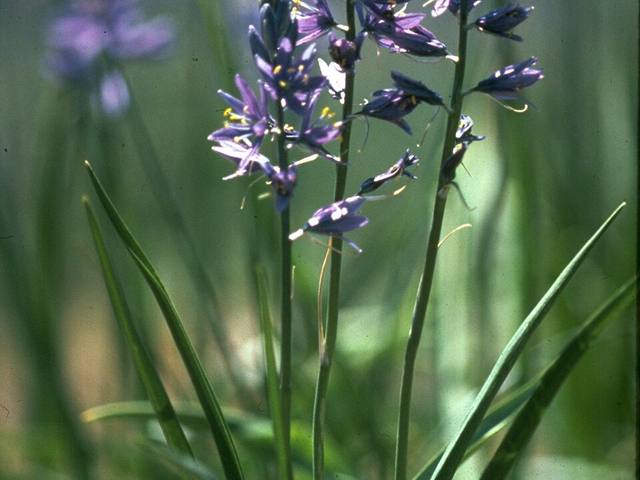
Blue spring meadows and sweet, slow-roasted bulbs, a staple of Northwest nations. Never confuse it with death camas.
Hardiness: zones 4 to 8
Light: full sun to part shade
Size: about 2 ft tall, 1 ft wide
Harvest: June to July
From: W. North America
Here: Hardy in the Lake Erie shore climate (zone 6b to 7a), so it can live outdoors in the ground.
Good for: food, pollinators.
Native to: Pacific Northwest, Rockies & Great Basin, California, Western Canada. Hardy in zones 4 to 8.
The story
Camas bulbs were the most important plant food of the Pacific Northwest and northern Rockies; Nez Perce, Coast Salish, Kalapuya and Nimiipuu women tended vast camas prairies with fire and digging sticks, roasted the bulbs in pits for days until sweet, and traded them across the mountains. Lewis and Clark survived on it and nearly died of it.
Planting
Full sun or light shade, moist spring soil that dries in summer, as in a meadow; plant bulbs 4 inches deep in autumn. It naturalizes slowly.
Growing
Let the leaves die back fully in summer and keep the bed dry then. Do not mow until seed drops. Never dig where death camas (white-flowered) grows among it.
Harvest and use
Dig bulbs in late spring or summer after flowering, from an established patch only; pit-roast 24 hours or slow-cook for the sweet inulin flavour. Never confuse with death camas.
What to watch for
Death camas lookalike, and gophers.
See if Camas fits your yard
Free planner: enter your ZIP for frost dates, climate fit and a sowing calendar. No account, no ads, no tracking cookies.
More native and wild plants
General guidance, not professional advice. Conditions vary by yard and year; for local specifics ask your county extension office. Never eat a wild plant you cannot identify with certainty. Traditional uses are shared as history, not medical advice. © 2026 Sean Priest · Irie Orchard. Terms & credits · Privacy · Home