Pigeon plum
Coccoloba diversifolia
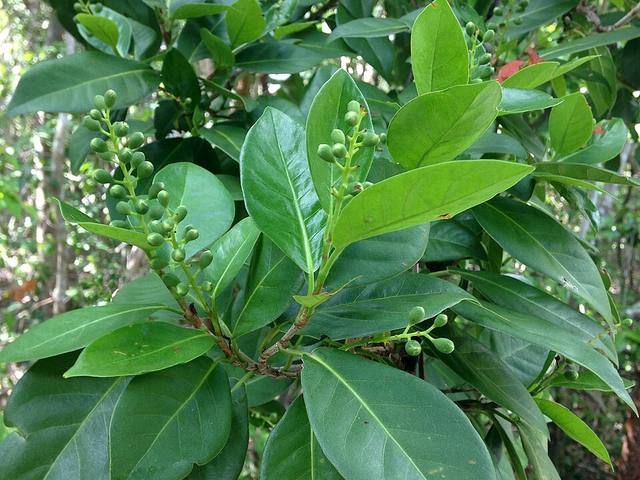
Sea grape's forest cousin: small purple fruit, good hammock shade.
Hardiness: zones 10 to 11
Light: full sun to part shade
Size: about 30 ft tall, 20 ft wide
Harvest: September to November
From: S. Florida and the Caribbean
Drought-hardy once established
Here: Too tender to overwinter outdoors on the Lake Erie shore (zone 6b to 7a): grow it in a pot and bring it in, or treat it as an annual.
Good for: food, wildlife.
Native to: Southeast. Hardy in zones 10 to 11.
The story
Pigeon plum grows in the hammocks of the Florida Keys and the Bahamas, where its small purple fruit was eaten by Taíno and Bahamian families and feeds pigeons and mockingbirds; it is sea grape's forest cousin and a shade tree of Key West streets.
Planting
Full sun or part shade, sand or limestone, salt; no frost. Plant a female with a male nearby; a 30-foot tree.
Growing
Water the first year, then nothing. Prune to shape.
Harvest and use
Fruit ripens purple in autumn; thin flesh, tart-sweet, eaten fresh or made into jelly.
What to watch for
Frost; otherwise nothing.
See if Pigeon plum fits your yard
Free planner: enter your ZIP for frost dates, climate fit and a sowing calendar. No account, no ads, no tracking cookies.
More native and wild plants
- Labrador tea
- White spruce (spruce tips)
- Coast live oak
- California bay laurel
- Yerba buena
- California blackberry
General guidance, not professional advice. Conditions vary by yard and year; for local specifics ask your county extension office. Never eat a wild plant you cannot identify with certainty. Traditional uses are shared as history, not medical advice. © 2026 Sean Priest · Irie Orchard. Terms & credits · Privacy · Home