Labrador tea
Rhododendron groenlandicum
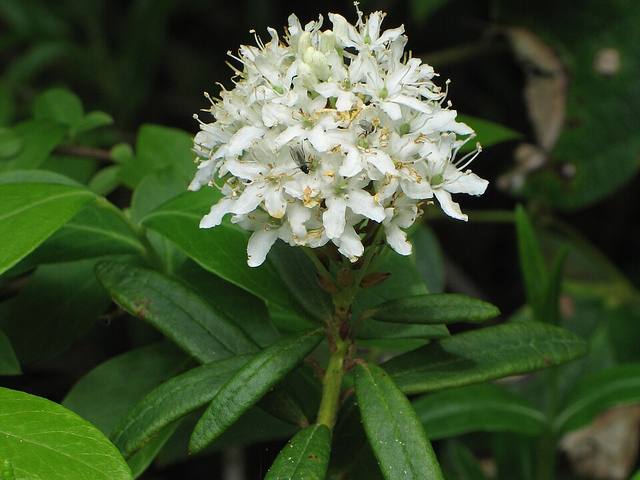
Fragrant leaves for a mild tea in small amounts; a bog shrub of the far north.
Hardiness: zones 1 to 5
Light: part shade
Size: about 3 ft tall, 3 ft wide
Harvest: June to August
From: Boreal North America
Here: Wants more winter cold than the Lake Erie shore (zone 6b to 7a) provides.
Good for: food, pollinators, wildlife, traditional use.
Native to: Alaska, Northern Europe & the taiga, Eastern Canada, Western Canada. Hardy in zones 1 to 5.
The story
Labrador tea was steeped by Cree, Dene, Inuit and Anishinaabe families across the north as a daily drink and a medicine for colds and stomach; Hudson's Bay voyageurs adopted it, and it was drunk in New England during the Revolution's tea boycott. Mild and aromatic, in moderation.
Planting
Part shade or sun, wet acid peat, and a cold climate; a bog shrub to 3 feet. Plant in spring in a peat bed kept moist.
Growing
Keep wet with rainwater; mulch with needles. It is slow and hates lime and heat.
Harvest and use
Pick leaves any time, dry them, and steep lightly; drink in moderation, a cup at a time. The fuzzy undersides distinguish it from toxic lookalikes such as bog laurel.
What to watch for
Lookalikes (bog laurel, leatherleaf), heat, and lime.
Safety
Medicinal uses here are shared as history, not advice. Kitchen amounts are fine for most people, but teas, tinctures and supplements can interact with medicines and aren't safe for everyone, especially in pregnancy, while breastfeeding, for children, or with liver or kidney problems. Ask a doctor or pharmacist before taking any plant as medicine.
See if Labrador tea fits your yard
Free planner: enter your ZIP for frost dates, climate fit and a sowing calendar. No account, no ads, no tracking cookies.
More native and wild plants
- White spruce (spruce tips)
- Coast live oak
- California bay laurel
- Yerba buena
- California blackberry
- Blue elderberry
General guidance, not professional advice. Conditions vary by yard and year; for local specifics ask your county extension office. Never eat a wild plant you cannot identify with certainty. Traditional uses are shared as history, not medical advice. © 2026 Sean Priest · Irie Orchard. Terms & credits · Privacy · Home