Cocoplum
Chrysobalanus icaco
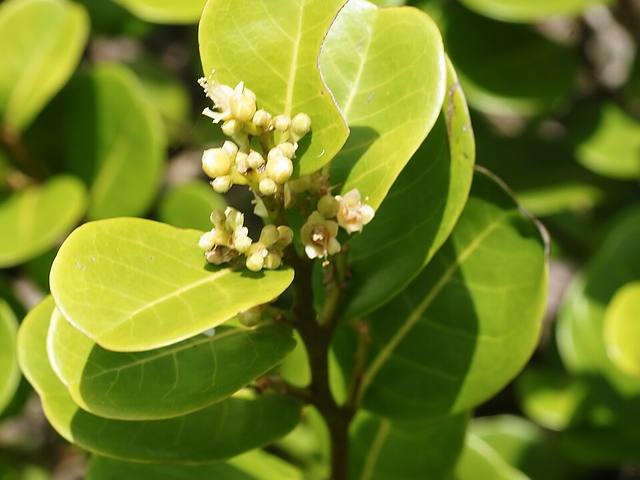
Sweet, mild beach fruit for jam; a tough salt-tolerant hedge.
Hardiness: zones 10 to 11
Light: full sun to part shade
Size: about 12 ft tall, 10 ft wide
Harvest: June to September
From: S. Florida and the Caribbean
Drought-hardy once established
Here: Too tender to overwinter outdoors on the Lake Erie shore (zone 6b to 7a): grow it in a pot and bring it in, or treat it as an annual.
Good for: food, wildlife.
Native to: Southeast, Mexico, Central America & the Caribbean. Hardy in zones 10 to 11.
The story
Cocoplum grows on the beaches and swamp edges of South Florida and the Caribbean, where the Taíno, Calusa and later Bahamian and Seminole families ate the mild fruit fresh and made jam; its oily kernel was also eaten, and it holds dunes against storms.
Planting
Full sun or part shade, sand, salt spray; no hard frost. Plant in spring as a hedge or specimen; evergreen to 12 feet.
Growing
Water the first year, then little. Clip as a hedge. It is used by the ton in Florida landscaping without anyone eating it.
Harvest and use
Fruit ripens white, pink or purple through summer; mild and sweet, best as jam. The roasted kernel is almond-like.
What to watch for
Frost; nothing else.
See if Cocoplum fits your yard
Free planner: enter your ZIP for frost dates, climate fit and a sowing calendar. No account, no ads, no tracking cookies.
More native and wild plants
General guidance, not professional advice. Conditions vary by yard and year; for local specifics ask your county extension office. Never eat a wild plant you cannot identify with certainty. Traditional uses are shared as history, not medical advice. © 2026 Sean Priest · Irie Orchard. Terms & credits · Privacy · Home